

Göring: Ovviamente la gente non vuole la guerra. Perché un qualche poveraccio d’una fattoria dovrebbe voler rischiare la propria vita in una guerra quando quel che può ottenerne nel migliore dei casi è di tornare vivo alla sua fattoria? Naturalmente la gente comune non vuole la guerra; né in Russia né in Inghilterra né in America, né, per quel che conta, in Germania. Questo è chiaro. Ma dopotutto sono i leader di un Paese che ne determinano la politica ed ogni volta è solo questione di portare il popolo dove lo si vuole, ciò è sempre vero, in una democrazia come in una dittatura fascista, in presenza d’un Parlamento o in una dittatura comunista.
Gilbert: Una differenza c’è. In una democrazia il popolo ha una voce nelle decisioni politiche attraverso i rappresentanti che ha eletto, e negli Stati Uniti solo il Congresso può dichiarare guerra.
Göring: Oh, sì tutto ciò è splendido, ma voce o non voce, il popolo può sempre essere sottomesso al volere dei leader. È facile. Tutto ciò che devi fare è dir loro che sono sotto attacco e denunciare i pacifisti per la loro mancanza di patriottismo che non può che mettere a rischio il Paese. Funziona allo stesso modo in qualunque nazione. (Intervista con Gilbert nella cella di Göring durante il processo di Norimberga per crimini di guerra – 18 Aprile 1946)
Questo era vero quasi un secolo fa, ma oggi la guerra è cambiata, il coinvolgimento dei civili è praticamente immediato e la censura funziona fino ad un certo punto sicché…
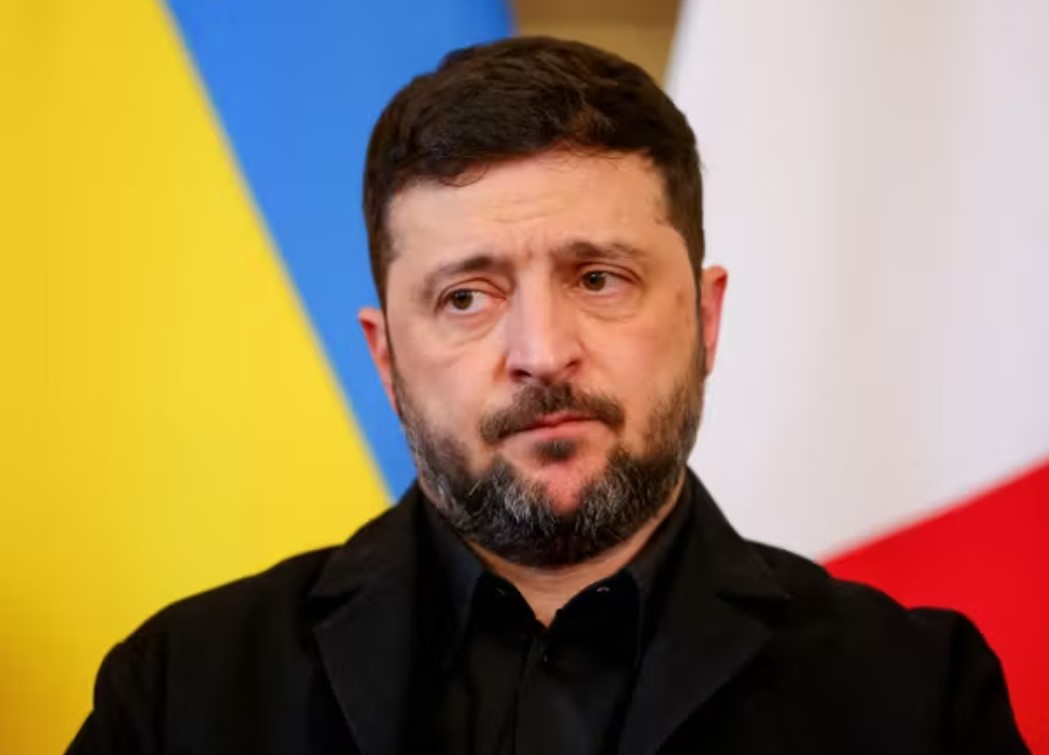
E siamo al Piano in 5 punti di Volodymyr Zelenskyy:
1. Invito ad entrare nella Nato
Il primo punto essenziale al completamento del piano prevede un invito da parte dell’Alleanza. Sebbene l’adesione effettiva sia ancora lontana nel tempo, un invito ad aderire invierebbe un segnale forte alla Russia e a Vladimir Putin. “Un invito è una decisione forte che richiede solo determinazione”, ha detto il presidente ucraino.
2. Invio di armi senza restrizioni al loro utilizzo
Zelensky ha stilato un elenco di armi necessarie a proteggersi e per portare “la guerra vicino a casa per il Cremlino”. Richiesto anche l’addestramento e capacità di difesa aerea per scoraggiare gli attacchi russi, dati satellitari in tempo reale da parte degli alleati, la fine di tutte le restrizioni sull’uso di armi donate per colpire all’interno della Russia e l’aiuto degli alleati per abbattere missili e droni sul territorio ucraino. Molti di questi passi sono stati bloccati dai timori occidentali di oltrepassare le ‘linee rosse’ di un coinvolgimento diretto nella guerra.
3.Deterrenza
Il piano prevede poi di dispiegare sul proprio territorio un pacchetto completo di deterrenza strategica non nucleare, sufficiente a proteggere l’Ucraina da qualsiasi minaccia militare proveniente dalla Russia. Di fronte a ciò, Mosca dovrebbe accettare di prender parte ad un “onesto” processo diplomatico per una giusta fine della guerra, o si troverà a non poter più continuare a combattere grazie agli aiuti forniti all’Ucraina. Le armi specifiche non sono state rivelate da Zelensky nel suo discorso al Parlamento, ma ha detto che i leader di Stati Uniti, Germania, Francia e Regno Unito conoscono le richieste di Kiev.
4. Potenziale economico strategico
L’Ucraina propone ai partner dell’Unione Europea e degli Stati Uniti di firmare un accordo speciale sull’uso comune delle risorse critiche possedute dall’Ucraina, come litio, gas e titanio, e di produrre energia insieme in futuro.
5. Prospettive post-guerra
Infine, Zelensky sostiene che con la fine della guerra sarà in grado di poter partecipare al miglioramento della sicurezza europea, grazie al contributo delle sue forze armate particolarmente abili e abituate al combattimento. “Se i partner sono d’accordo, prevediamo di sostituire alcuni contingenti militari delle forze armate statunitensi di stanza in Europa con unità ucraine dopo la guerra – ha detto il presidente – Gli ucraini hanno dimostrato di poter essere una forza che il male russo non può superare”
Ora i punti 3-4 e 5 riguardano il dopo, il p.to 1 è un sogno e del p.to 2 si sa già e la Federazione Russa non ha abboccato all’amo.
Di fatto l’intero piano è solo una richiesta di invio truppe NATO in virtù dell’Art. 5. il che, però, vorrebbe dire Guerra Totale lungo una linea di confine –e non solo– che misura qualche migliaio di km…difesi come? Da chi? Con quali armi? Con quali munizioni? Prodotte dove? Spostate come? Distribuite come? Questo per non parlare dello stato pietoso in cui versano le FFAA dei Paesi EU e della nulla volontà degli USA di inviare proprie truppe…
Quanto dureremmo ad un vero attacco? Quanto durerebbe l’Ucraina ad un vero attacco nel caso di uno scontro totale? Quanto durerebbero in carica i Governi Occidentali? Quanto durerebbe la NATO? Quanto durerebbe la leadership della Presidente von der Leyen?
Il Piano della vittoria di Zelenskyy è solo un assist alla campagna elettorale di Kamala Harris e nulla più e dubito che Zelenskyy non lo sappia.
Da oggi comincerà tutto un giro di incontri, dibattiti, disamine, pronunciamenti… buoni per arrivare alla consultazione elettorale statunitense: perchè questa è la sola cosa che in questo momento importa a Washington e non solo a Washington.
L’Ucraina prima di diventare lo strumento delle follie neocons aveva un’ottima base industriale ed agricola Commerciava con Russi ed Europei e con calma avrebbe potuto entrare nella Ue senza scontentare la Russia Sarebbe bastata una politica neutrale un esercito ridotto e alcune concessioni alle popolazioni del Donbass sul modello altoatesino.
Per somma l’Ucraina, che oltretutto vanta un ottimo sottosuolo dal punto di vista minerario, sarebbe potuta diventare un nodo economico di primaria grandezza giocando di sponda tra Stati Uniti, Federazione Russa e quella Cina per la quale era un nodo cruciale della Nuova via della Seta: le sarebbe bastato questo per diventare un Paese ricco sotto tutti i punti di vista.
Non sarebbe successo niente di niente. Ed invece gli Ucraini si ritrovano ora alle prese con una dittatura palese, un paese distrutto, danni enormi e forse un milione di morti e altrettanti mutilati a vita.
Si parla di 40/50 anni per riportare le cose ad un livello accettabile e 400/500 Mld di EUR per ricostruire il paese. Somme che molto probabilmente nessuno concederà
Purtroppo l’aver ascoltato le sirene USA e NATO e’ costato carissimo a questo disgraziato popolo e all’Europa costerà altrettanto sul piano (per ora) economico.
————————————————————
ZELENSKYY: THE “VICTORY PLAN”? … SURE, BUT WHOSE?
Göring: Of course people don’t want war. Why would some poor man on a farm want to risk his life in a war when what he can get out of it at best is to return alive to his farm? Of course ordinary people do not want war; neither in Russia nor in England nor in America, nor, for that matter, in Germany. That much is clear. But after all it is the leaders of a country who determine its policy and every time it is just a matter of getting the people where you want them, that is always true, in a democracy as in a fascist dictatorship, in the presence of a parliament or in a communist dictatorship.
Gilbert: There is a difference. In a democracy the people have a voice in political decisions through the representatives they have elected, and in the United States only Congress can declare war.
Göring: Oh, yes all that is splendid, but voice or no voice, the people can always be subservient to the will of the leaders. It’s easy. All you have to do is tell them they are under attack and denounce the pacifists for their lack of patriotism, which can only endanger the country. It works the same way in any country. (Interview with Gilbert in Göring’s cell during the Nuremberg war crimes trial-April 18, 1946)
That was true almost a century ago, but today war has changed, civilian involvement is virtually immediate, and censorship works up to a point so that…
And here we are at Volodymyr Zelenskyy’s 5-Point Plan:
1. Invitation to join NATO
The first point essential to the completion of the plan involves an invitation from the Alliance. Although actual membership is still some time away, an invitation to join would send a strong signal to Russia and Vladimir Putin. “An invitation is a strong decision that only requires determination,” the Ukrainian president said.
2. Sending weapons without restrictions on their use
Zelensky drew up a list of weapons needed to protect themselves and to bring “war close to home for the Kremlin.” He also demanded air defense training and capabilities to deter Russian attacks, real-time satellite data from allies, an end to all restrictions on the use of donated weapons to strike inside Russia, and help from allies to shoot down missiles and drones on Ukrainian territory. Many of these steps have been blocked by Western fears of crossing the ‘red lines’ of direct involvement in the war.
3.Deterrence
The plan then calls for deploying on its territory a comprehensive package of non-nuclear strategic deterrence, sufficient to protect Ukraine from any military threat from Russia. In the face of this, Moscow would have to agree to take part in an “honest” diplomatic process for a just end to the war, or it would find itself unable to continue fighting thanks to the aid provided to Ukraine. Specific weapons were not revealed by Zelensky in his speech to Parliament, but he said the leaders of the U.S., Germany, France, and the U.K. are familiar with Kiev’s demands.
4. Strategic economic potential
Ukraine proposes to its European Union and U.S. partners to sign a special agreement on the joint use of critical resources possessed by Ukraine, such as lithium, gas, and titanium, and to produce energy together in the future.
5. Post-war perspectives
Finally, Zelensky argues that with the end of the war it will be able to participate in improving European security, thanks to the contribution of its particularly skilled and combat-accustomed armed forces. “If the partners agree, we plan to replace some of the military contingents of the U.S. armed forces stationed in Europe with Ukrainian units after the war,” the president said, “The Ukrainians have shown that they can be a force that Russian evil cannot overcome.”
Now items 3-4 and 5 are about the aftermath, item 1 is a dream and item 2 is already known and the Russian Federation has not taken the bait.
In fact the whole plan is just a request to send NATO troops under Art. 5. which, however, would mean Total War along a border line -and beyond- measuring a few thousand kilometers…defended how? By whom? With what weapons? With what ammunition? Produced where? Moved how? Distributed how? This is to say nothing of the sorry state of the FFAA of EU countries and the unwillingness of the U.S. to send its own troops…
How long would we last to a real attack? How long would Ukraine last to a real attack in the case of an all-out confrontation? How long would Western governments last in office? How long would NATO last? How long would President von der Leyen’s leadership last?
Zelenskyy’s Victory Plan is just a campaign assist for Kamala Harris and nothing more, and I doubt Zelenskyy does not know it.
From today on, a whole round of meetings, debates, examinations, pronouncements will begin… good to get to the U.S. electoral consultation: because that is the only thing that matters right now in Washington and not only in Washington.
Ukraine before becoming the tool of the neocons follies had a very good industrial and agricultural base Traded with Russians and Europeans and calmly could have joined the EU without displeasing Russia A neutral policy a reduced army and some concessions to the Donbass peoples on the Alto Adige model would have sufficed.
To sum up, Ukraine, which moreover boasts an excellent subsoil from the mining point of view, could have become a major economic node by playing second fiddle between the United States, the Russian Federation and that China for which it was a crucial node of the New Silk Road: that would have been enough for it to become a rich country in all respects.
Nothing at all would have happened. And instead the Ukrainians now find themselves grappling with a blatant dictatorship, a destroyed country, enormous damage and perhaps a million dead and as many maimed for life.
They are talking about 40 to 50 years to bring things back to an acceptable level and 400/500 BILLION EUR to rebuild the country. Sums that most likely no one will grant
Unfortunately, listening to the U.S. and NATO sirens has cost this unfortunate people dearly, and it will cost Europe just as much economically (for now).