

The real test of the new regional architecture begins now
Abstract
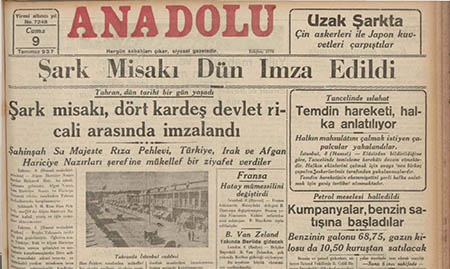
The 1937 Sa’dabad Pact provides a useful historical lens for interpreting the new security architecture that emerged in 2026 with the Mecca Agreement between Turkey, Saudi Arabia, and Pakistan.
Although they belong to profoundly different geopolitical contexts, the two cases raise a common question: the ability of regional states to transform a convergence of interests into a sufficiently autonomous and durable strategic framework.
The Mecca Agreement introduced a principle of collective deterrence that the Istanbul meeting on August 31 began to translate into institutions, industrial cooperation, and joint technological development.
The real question now concerns the possible evolution of this trilateral core into a broader, polycentric network, in which Ankara, Riyadh, and Islamabad can assume complementary roles.
From this perspective, the absence of Egypt and Iran and the growing role of China open up further space for competition and connection among different regional architectures.
The real test, however, will be the system’s ability to generate strategic solidarity when the interests of its members begin to diverge.
In 1937, Turkey, Iran, Iraq, and Afghanistan signed the Sa’dabad Pact in Tehran – named after the summer residence of the Shah of Persia, Reza Pahlavi – a non-aggression and regional cooperation agreement that was viewed favorably by the United States and other Western powers, intended to promote border stability and limit external interference.
Its origins, however, were primarily regional and were rooted in the bilateral relations built in previous years between Ankara, Tehran, Baghdad, and Kabul.
The international context in which the pact took shape, however, deserves special attention. Turkey had just reaffirmed, through the 1936 Montreux Convention, its control over the Straits and secured the right to fortify them – a move that significantly altered the strategic balance in the Black Sea.
Moscow had greeted the new regime with reservations, primarily because it left Ankara with a decisive role in controlling access to the Black Sea, while still granting the coastal powers a privileged position. S
oviet demands for a more radical revision of the Straits regime and for forms of shared control would emerge more clearly in the years immediately following, particularly during the Turkish-Soviet negotiations of 1939 – 40.
It is therefore interesting to note how, even on the eve of World War II, the construction of a regional security framework could be intertwined with the interests of the great powers.
This is not to argue that Washington or London created Sa’dabad, nor that the pact was simply a Western instrument serving anti-Soviet purposes. Its origin was essentially regional.
However, the favor with which the Western powers viewed that initiative raises a question that remains relevant today: when a new regional security architecture emerges, to what extent does its development respond exclusively to the region’s internal dynamics, and to what extent can it be influenced – directly or indirectly – by the interests of external powers?
It is a question that, mutatis mutandis, could also be asked in 2026. If the United States’ favorable stance toward the agreement between Turkey, Saudi Arabia, and Pakistan is viewed in light of that precedent, it becomes legitimate to question not so much the existence of alleged American orchestration – which would require evidence not currently available – but rather the extent to which Washington might consider the formation of a new regional deterrent capability to be useful, or even strategically desirable.
And it is precisely the different ways in which Washington and Beijing have reacted to the new regional dynamics that make the question just raised even more interesting, especially when considered in light of what Xi Jinping stated during his recent trip to Egypt.
It is perhaps precisely here that one of the most interesting strategic contradictions of 2026 emerges.
Washington and Beijing, while operating from profoundly different geopolitical positions, seem, in fact, to converge at least on the principle that countries in the region must assume greater responsibility for their own security.
Donald Trump enthusiastically welcomed the Mecca Agreement, presenting it as a sign of the growing ability of Middle Eastern countries to defend themselves independently, and a few days later – on September 2 – Xi Jinping argued in Cairo that the peoples of the Middle East must be “masters of their own affairs”, reject external interference, and build a new regional security architecture.
This convergence, however, may be only superficial. The real issue, in fact, is not whether Washington and Beijing are for or against greater regional autonomy, but rather understanding what degree of autonomy they are actually willing to accept when it begins to translate into the ability of regional actors to build security mechanisms not directly dependent on the great powers.
In both cases, regional autonomy appears to be accepted only up to the point where it begins to translate into full strategic autonomy from the major powers.
In other words, autonomy is acceptable, but only up to a certain point: as long as it strengthens the ability of regional actors to directly bear the cost of their own security; much less so when it begins to produce a collective capacity to decide, act, and deter without necessarily having to go through existing power structures.
Washington may welcome a greater capacity on the part of its partners to directly shoulder the burden of regional security, provided that this does not evolve into an alternative structure to the U.S. security order.
Beijing, for its part, may favor a reduction in Western interference and the construction of a more autonomous regional order, but at the same time has an interest in preventing such autonomy from producing a strategic network in which even its most important partners – starting with Pakistan -gain room to maneuver that cannot easily be brought back under its influence.
The difference, therefore, is not between a power in favor of and a power opposed to regional autonomy, but between different models of autonomy and, above all, between different limits on its acceptability.
It is a dynamic that, mutatis mutandis, echoes that already observable in the relationship between Moscow and Ankara on the eve of the establishment of Sa’dabad.
The parallel does not, of course, concern the nature of the two powers or the structure of their respective international systems, but rather a more general dynamic: an external power can support the stabilization of a region and, at the same time, view with caution the growing autonomy of one of the actors that this stabilization helps to produce.
Even then, a great power could favor regional stabilization while simultaneously viewing with suspicion the strengthening of the strategic autonomy of one of the states involved.
The real novelty of 2026 could therefore be precisely this: the great powers seem to accept the idea of greater regional autonomy, but not necessarily that of a regional autonomy that could gradually slip out of their respective spheres of influence.
In other words, the issue is no longer merely who controls the Middle East, but to what extent Washington, Beijing, and Moscow are willing to accept that regional actors themselves – without an external center – will build the security networks of the future.
After all, a not entirely dissimilar dynamic can also be observed in the history of European integration.
The United States strongly supported the process of building Western Europe, viewing it as an essential tool for the political, economic, and strategic stabilization of the continent and – especially during the Cold War – as a complementary element to Atlantic security.
But the relationship between Washington and the European project has always been marked by a tension between integration and autonomy: U.S. support was easier to maintain as long as European integration helped strengthen the West without calling into question the central role of the United States in the transatlantic security architecture.
The issue became progressively more complex when the European Union began to develop its own foreign policy, autonomous security and defense instruments, and, above all, the concept of “strategic autonomy”.
This does not, of course, involve the creation of a European state independent of Washington – and the European Union continues to regard NATO as the foundation of collective defense for its member states – but rather a growing aspiration to possess its own capabilities to act autonomously when European interests do not necessarily coincide with those of the United States.
In this case as well, therefore, autonomy appears acceptable as long as it remains compatible with the dominant strategic architecture; it becomes more problematic, however, when it tends to evolve into the ability to decide and act independently of the center of power that that very architecture helped to build.
The lesson, in this case as well, is not that integration necessarily produces strategic autonomy, but that an architecture initially supported by or compatible with an external power can, over time, develop interests and capabilities that alter its relationship with that same power.
It is precisely this tension that could also be at work in the new Middle Eastern system: not the opposition between autonomy and dependence, but the definition of the point beyond which the autonomy of regional actors begins to alter the balance of power among the great powers.
This interpretation also engages with the strategic debate that emerged in Turkey following the Mecca Agreement. The idea of a “Sa’dabad 2.0”, proposed as a key to interpreting the new regional cooperation, does in fact capture a real element: the quest for greater capacity among regional actors to organize their own security autonomously.
But for the historical comparison to be useful, it must go beyond a simple analogy. While Sa’dabad was primarily a non-aggression pact and a mechanism for regional stabilization, the process launched in Mecca and institutionalized in Istanbul introduces a qualitatively different element: collective deterrence and, above all, the possibility that an autonomous strategic infrastructure will gradually emerge from the initial political cooperation.
It is precisely through this lens that the precedent of Sa’dabad becomes central: not as a model to be replicated, but as a historical precedent through which to assess the capacity of a new regional architecture to transform a convergence of interests into a durable strategic structure.
Born in a Middle East still deeply shaped by the aftermath of World War I, the dissolution of the Ottoman Empire, and the presence of the British and French colonial powers, the Sa’dabad Pact represented one of the first attempts by the region’s states to construct, to some extent autonomously, a framework for regional security and stabilization.
Based on this, and on everything discussed so far, it is important to emphasize that the reference to the 1937 Sa’dabad Pact is particularly useful precisely because it introduces a sense of historical caution into the interpretation of the current agreement between Turkey, Saudi Arabia, and Pakistan.
At first glance, the two periods belong to profoundly different contexts; however, it is precisely the difficulties that undermined the 1937 pact’s ability to evolve into a truly stable regional architecture that can offer some insights for evaluating today’s project – bearing in mind that, unlike today, the four Sa’dabad states were formally sovereign but possessed vastly different military and economic capabilities and highly unequal degrees of strategic autonomy, partly due to their varying relationships with external powers.
All these factors meant that the pact emerged primarily as an instrument of non-aggression, border stabilization, and the containment of interference, rather than as a truly integrated strategic alliance.
According to this interpretation, the differing reactions of the great powers in 2026 can hypothetically be viewed through a historical lens that remains highly relevant today, allowing us to assert that Washington’s enthusiastic welcome, Moscow’s yet-to-be-defined stance, and the different approach shown by Beijing are not necessarily attributable to a single strategic assessment.
And it is precisely this distinction that makes the comparison with 2026 useful, but also risky: Sa’dabad allows us to observe how regional convergence can produce a politically significant agreement without necessarily resulting in a strategic community; the Mecca Agreement, by contrast, is born with a much more ambitious level of deterrence and military cooperation from the outset.7
And in this context, it is precisely China’s position that serves as a litmus test, offering a possible parallel with the Soviet position on the eve of the Sa’dabad agreement. In 1936 – 37.
As is well known, at that time Moscow viewed the strengthening of Turkey’s strategic autonomy with growing attention and suspicion, following the Montreux Convention and as Ankara participated in the construction of a new regional framework alongside Iran, Iraq, and Afghanistan.
Now, in 2026, mutatis mutandis, Beijing finds itself facing a different situation, though one not entirely devoid of parallels: Pakistan, a key strategic partner of China, is entering a new regional security architecture alongside Turkey and Saudi Arabia, without Beijing serving as its institutional center.
This does not mean that China necessarily views the Mecca Agreement as hostile, nor that its reaction can be equated with the Soviet response of 1936 – 37.
The point is another: in both cases, a major external power finds itself observing the growing autonomy of one of its regional partners within a strategic configuration that it does not directly control.
But this is precisely where what could become one of the main vulnerabilities of the Mecca Agreement comes to light: its geographical and political incompleteness.
Iran’s absence is understandable in light of the tensions that preceded the agreement; Egypt’s, on the other hand, is harder to consider definitive. Cairo possesses demographic, military, and geographic clout that makes it unlikely, in the long term, to remain on the sidelines of any attempt to build a genuine regional security architecture.
If the ultimate goal were truly to build a broader regional security architecture, the ability to attract – or at least to engage – actors currently outside the core of the Mecca alliance would therefore become a decisive factor.
And it is precisely this gap that could offer Beijing particularly significant room for maneuver. China has no need, at least for the time being, to oppose the Mecca agreement.
It can support, as Xi Jinping did in Cairo, the principle of a new security architecture built by the countries of the region themselves and free from external interference.
But it is precisely this approach that could allow Beijing to propose, at a later stage, a broader interpretation of the concept of regional autonomy.
We do not know if this is the direction Beijing actually intends to pursue. It is, however, a strategically plausible scenario, especially given the relationships China maintains with both Pakistan and Egypt and the role that Chinese diplomacy has already played in fostering regional dialogue.
The question, then, becomes almost inevitable: what would happen if Chinese diplomacy succeeded in fostering a structural resumption of dialogue between Egypt and Iran and, through it, in connecting two actors that are currently outside the Mecca architecture?
It would not necessarily mean the emergence of a “Chinese” structure as an alternative to the Turkish-Saudi-Pakistani one. In this scenario, Beijing’s power would not necessarily stem from control over a single alliance, but from its ability to facilitate connections between different architectures and, through these connections, increase its overall influence in the regional system.
It could be something much more sophisticated: a network of networks, in which Beijing would not necessarily exercise formal leadership but would become the facilitator of links between different regional systems.
But at that point, the question would no longer be whether the Mecca agreement is destined to become an “Islamic NATO”. The issue is much broader: Who will be able to connect the various security architectures emerging in the Middle East, and, above all, who will be able to do so without becoming captive to a single alliance?
In other words, the competition may no longer take place solely between opposing alliances, but between different capabilities to connect alliances, states, and institutions without necessarily absorbing them into a single bloc.
And perhaps this is the strategic contest that has begun between Istanbul and Cairo – and what makes 2026 so intriguing. The question is not merely whether Washington, Moscow, and Beijing approve of the new architecture, but whether each of these powers will succeed in exerting sufficient influence over a regional network that is emerging – at least in the stated intentions of its key players – out of its own needs.
The key issue, therefore, will not be determining which great power will succeed in imposing its own model, but which actor – regional or external – will become the most difficult to exclude from the network of relationships that will be built.
At the time, the main challenge was a direct consequence of the fact that the convergence of interests that had led to Sa’dabad was not strong enough to transform the pact itself into an autonomous political-strategic system.
The participants shared certain needs – above all, the desire to preserve their sovereignty, consolidate regional stability, and reduce the risk of conflicts between neighbors – but they lacked a sufficiently solid common vision regarding the main geopolitical issues.
Furthermore, their differing relationships with external powers made it difficult to develop a truly autonomous position.
Subsequent events thus highlighted a recurring problem in multilateral frameworks: an agreement can survive formally without managing to produce an effective strategic community.
The shifting international balance of power during and after World War II gradually stripped Sa’dabad of its original political function, leading to its dissolution after its intended term had expired.
The problem, therefore, was not simply the duration of the agreement, but its limited ability to adapt to a profoundly changed strategic environment.
It is this – rather than the mere formal duration of the pact – that offers the lesson relevant to 2026: a regional architecture becomes strategically significant only when it succeeds in transforming initial political convergence into permanent mechanisms of cooperation and, above all, when those mechanisms continue to function even as the interests of the participants begin to diverge.
Today’s agreement, in fact, arises within a very different international system. There is no longer a simple dichotomy between colonial powers and emerging regional states, but rather a multipolar environment in which Turkey, Saudi Arabia, and Pakistan can simultaneously cooperate with the United States, maintain relations with China, engage in dialogue with Russia, and pursue their own regional strategies.
The difference is not merely quantitative but qualitative: the regional states of 2026 are not simply the targets of the great powers’ strategies, but can use the competition among them to expand their own room for maneuver.
Paradoxically, this difference could be both the strength and the weakness of the new architecture. The very openness that allows the three countries to avoid the logic of a bloc could, however, make it more difficult to determine the limits of their mutual solidarity.
The strength lies in the fact that the three countries do not seem to need to transform the agreement into a closed bloc. They can build regional cooperation capacity while keeping their relations with external actors open.
It is precisely this element that makes the category of “network” more appropriate – at least as an analytical hypothesis- than that of an “Islamic NATO”.
The real question, therefore, is whether this flexibility can evolve into a form of strategic resilience or whether, on the contrary, it makes the agreement vulnerable precisely at the moments when it would be called upon to demonstrate its effectiveness.
Turkey, Saudi Arabia, and Pakistan certainly share interests – regional security, strategic autonomy, countering specific threats, and a desire to increase their international influence – but they also have different agendas.
Turkey’s geopolitical reach extends from the Mediterranean to the Caucasus and Central Asia; Saudi Arabia focuses a key part of its strategy on Gulf security and economic transformation; Pakistan is directly embedded in the dynamics of South Asia and maintains a structural strategic relationship with China.
The question, therefore, is not merely whether these three countries are close enough today to sign an agreement, but whether they are sufficiently aligned to uphold it when their concrete interests inevitably begin to diverge.
Of course, the parallel should not be taken too far. The value of the historical precedent, therefore, does not lie in predicting the fate of today’s agreement, but in identifying the variables that may determine it.
Today, there are far greater economic, military, technological, and diplomatic capabilities, and an international system in which regional states enjoy a degree of autonomy that was much more limited in 1937. Furthermore, today’s agreement is founded on a much stronger deterrence and defense component than the Sa’dabad Pact.
Precisely for this reason, however, the 1937 precedent suggests certain variables to monitor: the ability to coordinate foreign policies, the management of regional differences, relations with major external powers, the willingness to provide concrete support to a member in the event of a crisis, and, above all, the agreement’s ability to survive a shift in national priorities.
In other words, these are the conditions that distinguish a political agreement from a strategic community.
If, on the other hand, differences in interests were to prevail over convergence, the risk would be the one already highlighted by the history of Sa’dabad: an agreement that is politically significant at the time of signing but incapable of transforming itself into a permanent power structure.
The real test begins now
However, the Istanbul meeting on August 31 introduces a new element that deserves special attention. Until the signing of the Mecca Agreement, in fact, it was still possible to interpret the Turkish-Saudi-Pakistani initiative as a contingent political and military response to conditions of severe regional instability.
Istanbul, on the other hand, marks a further step: from a political declaration to the establishment of an institutional mechanism designed to ensure the continuity of cooperation.
On August 31, the foreign and defense ministers and military leaders of Turkey, Pakistan, and Saudi Arabia met in Istanbul within the framework of the Strategic Political and Defense Committee established by the Mecca Agreement.
The joint communiqué announced the further institutionalization of cooperation, the creation of a Secretariat in Saudi Arabia, and its initial leadership – for three years – by a Pakistani Secretary-General.
The three countries also identified cooperation in the defense industry, technological development, and joint production as means to strengthen their capabilities and the cohesion of their armed forces. Turkish Ministry of Foreign Affairs – Joint Statement, August 31, 2026.
This is a development that deserves to be distinguished from mere declaratory diplomacy: for the first time, at least on an institutional level, the agreement is beginning to establish mechanisms designed to outlast the single political decision that gave rise to it, and in this sense, this is likely the most important aspect to emerge from Istanbul.
If Mecca represented the political decision, Istanbul represents the first concrete attempt to build the institutional framework necessary to ensure its continuity.
And it is precisely here that the Sa’dabad precedent acquires its definitive analytical value. The issue is no longer whether there is a convergence of interests among the three countries: the Mecca Agreement and the subsequent Istanbul meeting demonstrate that such a convergence exists.
The issue is whether this convergence is deep enough to produce institutions, interdependencies, and shared behaviors capable of withstanding future differences.
The question Istanbul poses today is therefore essentially the same, but in a completely different context: is the convergence between Turkey, Saudi Arabia, and Pakistan deep enough to survive the inevitable divergences in their national interests?
The issue is particularly sensitive because the new architecture is emerging in a multipolar environment. The three countries do not necessarily intend to sever their ties with the major external powers.
On the contrary, the most distinctive feature of the initiative may well be the possibility of building regional strategic capacity while simultaneously maintaining open relations with the United States, China, Russia, and other actors.
But this very flexibility harbors a potential vulnerability.
A network is more flexible than a bloc, but it is also harder to hold together in times of crisis.
As long as interests converge, the network can be extremely effective; when, however, a crisis arises in which Ankara, Riyadh, and Islamabad assign different priorities to the same events, it will be necessary to determine whether the political bond created by the agreement will be sufficient to produce a common response.
This is likely the true test of the Istanbul architecture.
It will not, in fact, be enough to establish a Secretariat, organize ministerial meetings, or increase industrial cooperation. These are necessary tools, but they do not yet constitute a strategic community.
The true test will lie in the ability to formulate a common position in the face of a crisis in which the three states are affected differently, or in a situation where one member deems it necessary to act while the others prefer to exercise caution.
Istanbul, however, also introduces an element that makes the current experiment potentially more robust than that of 1937: material interdependence.
If cooperation were to truly evolve toward joint production, technological development, interoperability of the armed forces, and permanent coordination, the relationship between the three countries would gradually cease to be merely political.
It would transform into a network of concrete industrial, technological, and military interests. This is the kind of bond that could make a subsequent breakup much more difficult.
The point, however, would not merely be the greater difficulty in withdrawing from the agreement, but the possibility that the cooperation itself might begin to generate new common interests that did not previously exist or that did not yet carry sufficient weight to influence national decisions.
The Istanbul communiqué already identifies cooperation in the defense industry and the joint development of technologies and production as priority areas. Joint Statement of the Strategic Political and Defense Committee.
From this perspective, the institutional distribution of functions is also significant. The Secretariat will be headquartered in Saudi Arabia, while Pakistan will serve as its first head.
Turkey, for its part, hosted the first meeting of the new body in Istanbul. It is premature to interpret this arrangement as a deliberately designed division of roles, but it is possible to see in it a structure in which none of the three states appears, at least for now, to be the sole focal point.
If this configuration were to be confirmed by the subsequent evolution of the agreement, we would be facing something different from a simple hierarchy between a leading country and two partners: a structure in which the distribution of capabilities could itself become a source of internal balance.
Riyadh bears the financial, energy, political, and symbolic weight of the Arab world; Islamabad possesses a particularly significant strategic military component, including a nuclear deterrent, as well as geopolitical depth in Asia; Ankara has significant industrial and technological capabilities in the defense sector and a geographic location that connects the Middle East, the Mediterranean, the Caucasus, and Asia.
In this interpretation, the three countries would not simply be three signatories to the same agreement, but three nodes with different and potentially complementary capabilities within a common structure.
If this complementarity were truly institutionalized, the structure could gradually develop its own internal logic.
However, the Turkish issue remains.
Turkey is both a member of NATO and a key player in this new regional architecture. This factor makes the distinction between a bloc and a network particularly interesting. If Ankara were able to utilize the new system without turning it into a tool that antagonizes the West, the Istanbul agreement could represent something new: not the birth of an alternative bloc, but the construction of a regional security layer superimposed on existing structures.
It is precisely this possibility of superimposition – and not necessarily of replacement – that makes the Turkish case particularly significant.
From this perspective, the term “Islamic NATO” risks being downright misleading.
The problem is not merely that some of NATO’s institutional characteristics are lacking – at least for now. It is that the very logic of the initiative seems to follow a different path: not the creation of a closed bloc, but the possibility of linking different capabilities while maintaining open relations with external strategic systems.
A NATO presupposes a relatively well-defined alliance structure and a certain strategic homogeneity. The comparison may be useful as a journalistic trope, but it risks obscuring the very most interesting aspect of the initiative: the possibility that it could develop an institutional logic different from that of traditional military alliances.
What seems to be emerging from the Istanbul summit, however, is a more fluid model: a core of three states around which a broader network of cooperation could gradually coalesce, without necessarily requiring a break with existing security architectures.
It is no coincidence that, following the signing of the agreement, Turkish authorities emphasized the open nature of the initiative. But this potential openness does not yet equate to the existence of a regional network: for this to materialize, other countries will need to join the same framework, and various levels of cooperation will need to develop—not merely a series of parallel bilateral agreements.
This is precisely the point on which the analysis will need to be tested in the coming months.
And this is precisely where the decisive issue for the future lies.
The Istanbul communiqué refers to further institutionalization, collective deterrence, cooperation in the defense industry, and joint technological development. These are steps that are qualitatively different from a mere political reaffirmation of the agreement.
Joint Communiqué of August 31, 2026 But they do not yet prove that the network exists, much less that it is intended to function as a coherent strategic system.
To verify this, it will be necessary to observe at least four elements in the coming months: to what extent the Secretariat will actually be put into operation; whether industrial cooperation will produce genuinely joint programs and not just declarations; whether effective mechanisms for interoperability and military consultation will be developed; and, above all, whether a political willingness will emerge to concretely support one of the three members in the event of a new crisis.
This is no minor detail: it is the distinction that separates a deterrence clause from its actual credibility.
This last point will be the true contemporary equivalent of the lesson of Sa’dabad.
Because a strategic network is not measured in moments when everyone has an interest in declaring unity. It is measured when the national interest of one of its nodes comes into conflict with that of the others.
The question then becomes broader: Can the mechanism begin to generate its own momentum?
If the institutions created by the three states were to lead, over time, to regular meetings, military coordination, joint industrial programs, technological development, interoperability, and growing interdependence, the relationship among the three countries could gradually become something other than the sum of the decisions made by individual governments.
Not because the institution would acquire an autonomous will in the strict sense, but because its very existence would begin to create interests, mutual expectations, and political, industrial, and military costs associated with any potential disengagement.
This is where the difference between simple coordination and true strategic architecture becomes substantial: in the former case, institutions serve the decisions of governments; in the latter, they can contribute, over time, to altering the incentives, expectations, and options available to those same governments.
This is the step that could transform an agreement into a true architecture.
And this is also where the issue of the node comes into play.
Turkey’s central role does not necessarily have to translate into formal leadership of the system. A leader must command; a node must connect.
The centrality of a node, in other words, is not measured by the absolute amount of power it possesses, but by the cost that other actors would have to bear to replace its functions.
The distinction is not merely semantic. A leader concentrates decision-making authority; a node gains influence because its position makes the connection between other actors more efficient, more credible, or more difficult to replace.
Ankara’s strength might lie not in becoming the exclusive center of the new structure, but in acquiring a position that is progressively harder to replace as the link between different capabilities: military and technological, geographic and industrial, regional and global.
But even this is, for the moment, a hypothesis that remains to be verified. The very configuration that emerged in Istanbul suggests, in fact, the possibility of a polycentric structure in which Turkey, Saudi Arabia, and Pakistan perform different functions without any of the three automatically being considered the center of the whole.
In such a configuration, centrality would not stem from the concentration of power in a single actor, but from the ability of the various nodes to make one another indispensable.
This is perhaps the most interesting difference compared to a traditional hierarchical alliance.
The decisive geopolitical question, therefore, is not merely who will be the leader of the new architecture, nor who its potential adversary might be. It is understanding what power structure is gradually emerging from the interaction between these three states.
For this reason, Istanbul may be remembered not so much as the definitive birth of a new alliance, but rather as the beginning of an experiment. Mecca established the political principle; Istanbul has begun to build the infrastructure.
The next step will be to determine whether that infrastructure will succeed in producing a genuine strategic community.
It is significant, in this regard, that the concept of a “Sa’dabad 2.0” has already emerged in the Turkish strategic debate. In this regard, one may refer to what Dr. Ibrahim Girgin wrote in his interesting article “Türkiye’n ihtihaci: Sadabad 2.0”.
The concept is effective because it conveys the idea of a region striving to build its own instruments of stabilization and security.
But the real question raised by developments in Mecca and Istanbul is perhaps more ambitious: not whether Sa’dabad is simply being revived in an updated form, but whether something is emerging that could not have existed in 1937 – a security network capable of progressively fostering military, technological, and political interdependence among different regional actors.
It is in this context that the distinction between an alliance and a network becomes decisive. The former can be built through an agreement; the latter must demonstrate over time that it is capable of generating connections and interdependencies that make it progressively more difficult to replace the functions performed by the other nodes.
And it is precisely here that the comparison with Sa’dabad takes on significance: not to argue that history is repeating itself, but to pose a question that remains open in 2026, just as it did in 1937.
Can regional convergence transform into a lasting system of power before the differences among its members outweigh the need to remain united?
Essential Bibliography
Historical and Diplomatic Sources
- Bilge, Mustafa L., “Sâdâbâd Paktı,” TDV Islamic Encyclopedia.
- S. Department of State, Foreign Relations of the United States, Diplomatic Documents Concerning Turkey, Iran, and Sa’dabad, 1937–1940.
- S. Department of State, Foreign Relations of the United States, documents relating to the Montreux Convention and subsequent disputes over the regime of the Straits.
- Dursun, Davut, “Bağdat Paktı,” TDV Islamic Encyclopedia.
Contemporary Primary Sources
- Ministry of Foreign Affairs of the Islamic Republic of Pakistan, Makkah Joint Defense Agreement, August 7, 2026.
- Republic of Türkiye, Ministry of Foreign Affairs, Strategic Political and Defense Committee of the Makkah Agreement for Joint Defense – Joint Statement, August 31, 2026.
- Ministry of Foreign Affairs of the People’s Republic of China, President Xi Jinping Holds Talks with President Abdel Fattah El-Sisi of Egypt, September 2, 2026.
News sources used for the developments of 2026
- Reuters, August 7, 2026 — signing of the Mecca Agreement.
- Reuters, August 30–31, 2026 — institutionalization and possible expansion to include other members.
- Reuters, September 2, 2026 — Xi’s visit to Egypt and a new regional security architecture.
- Turkey’s Ambition: Sadabad 2.0, Ibrahim Girgin, August 11, 2026, https://www.linkedin.com/pulse/t%C3%BCrkiyenin-ihtiyac%C4%B1-s%C3%A2d%C3%A2bad-20-i%CC%87brahim-girgin-vzd7f?utm_source=share&utm_medium=member_ios&utm_campaign=share_via