

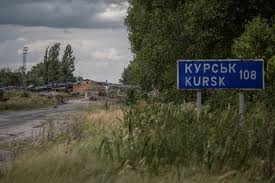

Il recente attacco del 6 Agosto 2024 dell’Ucraina alla Federazione Russa è decisamente qualcosa di, ancora oggi, assolutamente incomprensibile sia per quello che riguarda gli obiettivi perseguiti da Kyiv, sia per quello che riguarda la presunta (il condizionale è d’obbligo) sprovvedutezza delle FFAA russe che non poco ha stupito un’ampia messe di osservatori come ha sottolineato recentemente il Gen. Vincenzo Camporini, ex Capo di Stato Maggiore della Difesa, allorché il 10 Agosto ha testualmente dichiarato che “Quello che è impressionante è l’impreparazione dei Russi, come avessero dato per scontato che non c’era nessun rischio e quindi si poteva tranquillamente lasciare sguarnita una parte così importante della zona di confine. E’ abbastanza sorprendente che non sia stata fatta alcuna azione preventiva“.
Per dirla tutta, la cosa appare per certi versi decisamente strana anche per un’altra ragione: tra tutte le incursioni che le forze ucraine hanno lanciato in passato in territorio russo, ve ne è una avvenuta nel Marzo 2024 che si segnala alla nostra attenzione per la sua dinamica essendo stata portata avanti da tre unità armate anti-Cremlino che hanno fatto irruzione nelle regioni di Belgorod e Kursk provocando presumibilmente scontri con le forze russe in diversi insediamenti, scontri cui avrebbero fatto quasi immediatamente seguito diversi attacchi incessanti alla regione ucraina di Sumy.
A tale proposito è interessante notare come il tutto sia stato ampiamente documentato e rendicontato da diversi articoli apparsi perfino sulla stampa ordinaria come testimoniato, tra i tanti, da un articolo apparso il 12 Marzo 2024 sul sito di Euronews a firma di Ilaria Cicinelli e Michela Morsa ed intitolato “Guerra in Ucraina: attacchi in Russia, raid di gruppi armati anti-Cremlino oltreconfine”, articolo dal quale a suo tempo si è appreso di come l’Ucraina avesse lanciato numerosi attacchi con droni e razzi contro la Russia nella notte tra il Lunedì 11 ed il Martedì 12 Marzo 2024 che avevano colpito almeno nove regioni, tra cui quella di Mosca e di San Pietroburgo, interessando i sistemi di difesa aerei russi che per l’occasione avevano intercettato 25 droni diretti verso la capitale russa, Kursk e Belgorod danneggiando un deposito di petrolio e una raffineria della Lukoil.
Mosca all’epoca aveva pure dichiarato di aver respinto un’incursione terrestre transfrontaliera rivendicata da due gruppi armati paramilitari anti-Cremlino basati in Ucraina, la Legione della libertà della Russia ed il Battaglione siberiano, i cui effettivi , stando a quanto dichiarato da Mosca, nonostante avessero subito pesanti perdite erano comunque riusciti a violare il confine proprio con le regioni russe di Kursk e Belgorod.
Per somma, stando a quanto riferito dalla stessa agenzia di stampa russa Tass, all’epoca le autorità della città di Kursk avevano deciso di chiudere le scuole e passare alle lezioni online per motivi di sicurezza.
La domanda che a questo punto si impone è: a cosa dobbiamo la tanta dabbenaggine da parte russa mostrata il 6 Agosto? Ed ancora: è stata dabbenaggine o il comportamento del Cremlino è stato il frutto di un abile calcolo (affaire Lusitania docet, tanto per intenderci) volto ad accrescere il consenso dei Russi in vista di azioni molto più decise e violente nei confronti dell’Ucraina? Quando si ha a che fare con il Cremlino credo occorra rendersi conto che abbiamo a che fare con un establishment decisamente abile che da anni viene sottovalutato con i risultati che tutti abbiamo sotto gli occhi.
Aneddoticamente, tanto per capirci, anche se i più hanno ritenuto di accomunare il sussulto delle FFAA ucraine attuale alla disperata controffensiva delle orgogliose armate tedesche nelle Ardenne del 1944, ho preferito, richiamando la cosa anche nel titolo, rifarmi a quella che fu la famosa Battaglia del saliente di Kursk, quella che –tanto per intenderci– dal 5 al 16 Luglio del 1943 vide confrontarsi, in quella che è passata alla storia come la più grande battaglia di carri armati di tutti i tempi, la 9a Armata Tedesca del Gen. Walter Model e la 4° Armata Tedesca del Gen. Hermann Hoth con la 5° Armata Corazzata Sovietica di uno dei più grandi strateghi della storia, il Gen. Georgij Konstantinovich Zhukov, vicecomandante supremo dell’Armata Rossa.
Quello Zhukov che, vale la pena ricordarlo perché certe cose restano nella memoria di un esercito e nella filosofia politica di un Paese, vinse la cruenta battaglia grazie a una tattica di attesa–offesa (quella micidiale tattica che abbiamo visto essere stata utilizzata anche nel presente conflitto da Mosca in Ucraina): quando i Tedeschi riuscivano a conquistare una postazione, spesso era perché al generale sovietico faceva comodo così. Le sue bocche da fuoco erano già puntate dove i carri nemici si sarebbero fermati per diventare bersaglio dei fuochi di sbarramento che ne sfoltivano i ranghi in uno stillicidio continuo. Fu così che Kursk si rivelò una grande trappola per i Tedeschi: Zhukov aveva perso la metà dei suoi carri armati ma, al contrario dei Tedeschi, era in grado di rimpiazzarli subito e di scatenare la prevista controffensiva che, nel giro di un anno, avrebbe ricacciato i soldati del Führer oltre i confini russi.
Tornando a noi, poi –e sempre per ciò che concerne l’attacco ucraino del 6 Agosto 2024– vi è da aggiungere come ulteriore elemento di riflessione per sfatare la mitologia della sprovvedutezza che non solo, come visto, quella del 6 Agosto non è stata la prima volta che le Forze Armate di Kyiv hanno colpito la Russia, ma non è neppure stata la prima volta che lo hanno fatto con successo.
A tale proposito, non possiamo dimenticare che tra gli attacchi portati negli ultimi tempi con successo spiccano quelli condotti in profondità contro infrastrutture energetiche in Russia, così come quelli che hanno consentito la distruzione di scorte di armamenti aeronautici (secondo fonti ucraine si trattava di bombe FAB-500M-62 e KAB-1500LG, bombe fuel-air explosive ODAB-500PMV, missili aria-aria R-73 e pod di contromisure elettroniche Khybin per i velivoli Sukhoi Su-34); l’affondamento in seguito ad attacco missilistico (non confermato da Mosca) nel porto di Sebastopoli del sottomarino classe Kilo Rostov-sul-Don, che già era stato danneggiato da un attacco ucraino nel settembre 2023 e si trovava ai lavori in cantiere; la distruzione di 4 lanciatori per missili da difesa aerea a lungo raggio S-400 schierati in Crimea (non confermata da Mosca): tutte azioni che si differenziano da quella in corso per la particolarità dell’attacco diretto e non smentibile portato direttamente sul suolo della Federazione Russa e, soprattutto, contro obiettivi anche civili.
Ed infatti il fatto nuovo è proprio questo, così come risulta stupefacente che la cosa abbia ufficialmente colto di sorpresa un po’ tutti, a cominciare –stando alla narrativa ufficiale– dai Russi, anche se in quel “tutti” sarei orientato a valutare se vadano realmente inclusi non solo gli Stati Uniti (o per meglio dire una parte dell’establishment statunitense) ed il Regno Unito, ma anche –per tutto quanto sin qui visto– lo stesso Cremlino, per ragioni che nel caso degli USA e dello UK prendono le mosse da una osservazione a mio avviso fondamentale: il principale errore logico che accomuna attualmente tutti gli analisti occidentali è quello che fa sì che le due guerre di nostra stretta pertinenza attualmente in corso, quella in Ucraina e quella in Medio Oriente, siano erroneamente riguardate come due eventi indipendenti e non, come sarebbe più corretto fare, come fatti bellici riguardanti due teatri di guerra sì distinti, ma facenti parte di un unico conflitto globale che vede in lizza gli USA e l’Europa da una parte e il blocco sino-russo dall’altra, con sullo sfondo le imminenti elezioni presidenziali negli Stati Uniti.
Per quest’ultimo punto credo valga la pena spendere qualche parola sottolineando come l’evenienza di un cambio di rotta della Casa Bianca nel caso di una Presidenza Trump non sia estranea alla decisione di Zelensky e del suo entourage che in questo momento vedo oltremodo pressati dalla esigenza di riguadagnare quella credibilità che possa fornire gli strumenti di pressione necessari alla parte del GOP favorevole ad una prosecuzione della politica di supporto economico–militare a Kyiv: una esigenza che come già accennato in precedenza trova in qualche modo sostegno e supporto da parte della Presidenza Biden –o chi per lui– e del Partito Democratico che in questo momento non poco si trova nella necessità di giustificare all’elettorato statunitense i costi dell’incondizionato sostegno alla causa Ucraina ed a tutta la politica estera degli Stati Uniti dal 2022 ad oggi.
In questo senso l’indecifrabilità di quanto in corso nella regione di Kursk, la valenza tattica e le caratteristiche di questo confronto che il Gen. Leonardo Tricarico, ex Capo di Stato Maggiore dell’Aeronautica Militare e attuale Presidente della Fondazione Icsa, commentando l’avanzamento dell’esercito ucraino verso la centrale nucleare di Kursk, ha giustamente definito “un evento tattico avente un significato molto contenuto dal punto di vista operativo, una semplice smagliatura nel sistema di difesa russo che sarà prontamente rammendata” non sarebbe più tale guardando oltre il contingente, ovverosia assumendo un punto di vista che non si limiti a considerare il tutto solo dal punto di vista meramente bellico oltretutto con riferimento ad un unico scacchiere operativo.
E non lo sarebbe a maggior ragione perché se è vero che, come ha detto il Gen. Tricarico, a partire da questo attacco “è inverosimile pensare ad uno spostamento degli equilibri militari che quindi continuano a mantenere le caratteristiche, ormai consolidate fin dalle fasi iniziali dell’invasione russa, di una guerra di posizione e di logoramento, una condizione di stallo che, se dovesse perdurare, farà registrare limitati progressi territoriali russi a fronte di impegno e perdite enormi, anche umane” e che, comunque la si voglia mettere, pur considerando diverso “il dividendo che Zelensky può incassare dal punto di vista politico, e della percezione pubblica, internazionale ed interna su ambedue i fronti russo e ucraino” alla fine “i suoi effetti saranno in breve tempo riassorbiti, tanto da far ritenere poco sensato che Zelensky se ne possa avvalere in un ipotetico futuro tavolo negoziale”, è pur sempre vero che, ad esempio, l’azione in corso nel distretto di Kursk ha, per così dire, messo in ombra quanto stava avvenendo a Gaza nelle stesse ore.
Nello specifico intendo riferirmi alla affatto di secondaria importanza notizia, pressoché passata sotto silenzio, diffusa alle 08:01 dell’11 Agosto dal The Times of Israel riguardante i nuovi avvisi di evacuazione emessi dall’IDF per i Palestinesi al momento presenti nell’area di Khan Younis, avvisi che hanno implicitamente dato conto della ulteriore modifica dei confini della zona umanitaria designata da Israele nel senso che il quartiere al-Jalaa di Khan Younis non sarà più considerato parte della zona umanitaria stessa. Tanto a detta dell’IDF si sarebbe reso necessario per poter operare al fine di eradicare dalla stessa area tutta una serie di attività di Hamas in essa basate cui lo stesso IDF ha fatto riferimento in un suo comunicato che testualmente recita: “A causa di numerosi atti di terrorismo, dello sfruttamento della zona umanitaria per attività terroristiche e del lancio di razzi contro lo Stato di Israele dal quartiere di al-Jalaa, rimanere in quest’area è diventato pericoloso“.

Lo stesso IDF sempre l’11 Agosto2024 ha avuto cura di rendere noto di aver segnalato preventivamente la cosa ai civili presenti nel quartiere di al–Jalaa al fine di mitigare i danni che agli stessi potrebbero derivare dell’operazione militare predisposta dall’IDF per risolvere il problema con una azione, ma soprattutto con una decisione che, date le attuali circostanze geopolitiche, nonché di tempo e di luogo, è lecito ritenere sia per molti aspetti alquanto diversa nella sostanza dalle precedenti in quanto concretamente indicativa del dopoguerra che si va profilando per il Medioriente.
Un dopoguerra che, come aveva giustamente intuito Sami al-Ajrami e tradotto nel titolo di un reportage giornalistico del 9 Aprile 2024 che testualmente recitava “A Khan Yunis, città fantasma dove è morto il futuro di Gaza”, già da ora vede definitivamente sfumare quasi in sordina l’ipotesi di una “soluzione a due Stati” della controversia israelo–palestinese con buona pace di tutti i principali attori in campo.
Congetture? Certamente tutto è possibile, ma per quello che riguarda la nota relativa alla copertura mediatica di quanto accaduto nel breve volgere di poche ore vorrei richiamare l’attenzione sul fatto che lo stesso gioco, per così dire, di “luci ed ombre” è andato in scena a ‘parti’ invertite allorché si è reso necessario far calare l’attenzione sul caso Ucraina nel momento in cui gli Stati Uniti, in occasione del Vertice dell’Alleanza tenutosi a Vilnius nel Luglio del 2023, si trovarono nella necessità di evitare i riflettori puntati addosso nel momento in cui dovettero esplicitare il loro deciso “No!” all’ingresso dell’Ucraina nella NATO prima che fosse conclusa la guerra della stessa con la Federazione Russa.
Ovviamente per offrire una analisi per quanto possibile, se non esaustiva, perlomeno oggettiva, meritano la dovuta attenzione le opinioni di diverso tenore e prospettiva espresse da esperti di calibro quali, ad esempio, il già menzionato Gen. Tricarico che ha rilasciato un commento di sicuro rilievo allorché ha detto: “Operazioni che, almeno secondo quanto riportato da fonti mediatiche, sono apparse ‘pulite’ e precise, quasi gli Ucraini stiano impiegando in maniera professionalmente corretta l’armamento di lancio di precisione fornito dall’Occidente e magari anche i primi F16 operativi”, aggiungendo che “Questo sì, potrebbe costituire un significativo irrobustimento delle capacità militari ucraine anche se la quantità dei sistemi è ben lungi dall’aver raggiunto la massa critica necessaria a stabilire nuovi equilibri. Anche i tipi di obiettivi battuti fanno ritenere che, meglio tardi che mai, si sia collocato nella giusta priorità la neutralizzazione progressiva delle forze aerotattiche e della difesa, e la necessità di concentrare su di loro tutte le energie disponibili“.
Al Gen. Tricarico ha in un certo senso fatto eco il Gen.Vincenzo Camporini che a sua volta, commentando l’avanzata dell’esercito ucraino verso la centrale nucleare di Kursk, ha notato come “Venendo da un periodo piuttosto lungo di passività o meglio di atteggiamento difensivo, credo che con l’offensiva di Kiev si sia voluto far arrivare a a Mosca il messaggio ‘possiamo farvi ancora tanto male’. Un modo eventualmente per suggerire che forse è la davvero il momento di mettersi a un tavolo, ma con delle proposte serie, non irricevibili come quelle che fino adesso ha fatto Mosca“.
Un’osservazione quest’ultima decisamente interessante che personalmente accoglierei più di buon grado se non fosse viziata da quel dichiarasi del Gen. Camporini sfavorevolmente impressionato dall’impreparazione dei Russi senza farsi minimamente sfiorare dal dubbio che, visti i precedenti, quello che appare è esattamente ciò che i Russi volevano che gli Ucraini credessero per passare all’azione, anche se in apparenza tutto è avvenuto come se i Russi avessero “dato per scontato che non c’era nessun rischio e quindi si poteva tranquillamente lasciare sguarnita una parte così importante della zona di confine”.
La prova del nove, comunque la si voglia mettere, non tarderanno a fornircela gli stessi Russi nel momento in cui si troveranno al tavolo delle trattative, cosicché a questo punto non resta che attendere evitando, però, nel frattempo, di sposare acriticamente la lettura a noi più (opportunisticamente ed egoisticamente parlando come Europei ed Italiani) favorevole per evitare ulteriori passi falsi oltre quelli già fatti da un paio di anni a questa parte avendo eccessivamente sottovalutato l’Orso Russo.
Una ulteriore considerazione, giunti a questo punto, merita il ritorno mediatico immediato di quanto accaduto a seconda della prospettiva da cui si è ritenuto di procedere per cercare di dare un senso al recente attacco.
A ben guardare, tralasciando tutte le osservazioni e le considerazioni sin qui proposte, illustrate ed esaminate, non possiamo esimerci dal dire che se di primo acchito dal punto di vista mediatico la cosa può apparire avere una sua valenza, ma, intendiamoci, solo ad esempio ad uso e consumo della campagna elettorale del Partito Democratico americano, come pure della tifoseria rigorosamente salottiera pro Ucraina e di quanti in qualche modo, tra i membri più in vista dei Governi dei Paesi alleati degli Stati Uniti —e tra questi, in primis, di quelli alla guida di quegli Stati europei che più di altri si ritrovano e/o si ritroveranno a breve a dover fare i conti con la sempre più ineludibile necessità di giustificare ai rispettivi elettorati il crescente indebitamento pubblico gravato non poco anche dalle conseguenze derivanti dal locale conflitto (conseguenze tra le quali fanno non poco bella mostra di sé pure le correlate continue richieste di nuovi fondi avanzate dal Presidente Zelensky), dal punto di vista tattico e geostrategico, l’azione in corso è, purtroppo, di fatto un totale nonsense.
Un nonsense che a breve è oltremodo prevedibile si tradurrà nell’inutile sacrificio dei circa 3.000 uomini, dei mezzi corazzati, dell’artiglieria e delle munizioni relative impiegati per promuovere lo sfondamento del nulla, marciando idealmente in direzione di qual saliente di Kursk reso famoso dalla storia per essere stato il luogo dell’ultima colossale battaglia di carri della Seconda Guerra Mondiale.
Al di là degli ovvi commenti piovuti da più parti nel tentativo, come visto, di trovare un senso, di ascrivere una logica a questa strana incursione, alla fine il tutto si configura come un qualcosa difficilmente spendibile da Kyiv in tempi rapidi per tutta una serie di ragioni che poco si conciliano con l’impiego sì di una forza di attacco di élite —che, a quanto pare, è stata così composta:
22a brigata meccanizzata separata;
32a brigata meccanizzata separata;
88a brigata meccanizzata separata;
54° battaglione di ricognizione separato;
Battle Group dell’82a brigata d’assalto aviotrasportata separata;
reparto Ranger delle Forze per operazioni speciali;
103a brigata di difesa territoriale separata;
115° battaglione della 110a brigata di difesa territoriale separata;
49a brigata di artiglieria separata;
35° reggimento separato della Guardia Nazionale;
Gruppo UAV del comando “A” del Comando centrale dell’Ucraina;
Unità PSYOPS delle Forze per le operazioni speciali
(Con le truppe ucraine nella regione di Kursk vi sarebbero anche non meglio definiti ed inquadrabili “volontari” stranieri della Legione Internazionale come confermerebbero alcuni video che mostrano militari con l’uniforme ucraina in azione parlando tra di loro in lingua inglese) e quindi utilizzando reparti scelti tra le migliori unità meccanizzate e di fanteria (per somma, a quanto si sa, non solo supportati da droni e artiglieria, ma pure da mezzi occidentali come i veicoli da combattimento ruotati Stryker e cingolati Bradley statunitensi che hanno contribuito a permettere agli attaccanti di cogliere di sorpresa le guardie di frontiera russe e alcuni reparti militari composti da truppe di leva, solitamente non impiegate sui fronti bellici)—,
ma che, comunque la si voglia mettere, risulta essere concretamente troppo esigua numericamente per anche solo lontanamente pensare che l’attacco possa guadagnare a Kyiv una qualche significativa influenza in possibili colloqui di cessate il fuoco dopo le elezioni statunitensi, perché questo imporrebbe la capacità di Kyiv di consolidare i risultati ottenuti sul campo mantenendo il controllo della situazione come minimo fino a Novembre.
Alla luce di tutto ciò viene naturale osservare come il tutto ben poco e male si concili con l’attuazione di qualcosa di fondamentalmente assurdo visto che, per somma, si ha che:
- per la inconsistenza delle forze russe affrontate non può fare ascrivere il risultato ad una qualche superiorità effettiva delle FFAA ucraine cui fare riferimento per stimolare il mantenimento del supporto sin qui dato dall’Occidente a Kyiv, nonché promuovere in Patria e tra le fila delle FFAA ucraine la fiducia nella vittoria finale;
- per il ridotto numero degli effettivi impiegati l’azione non può configurarsi come il tentativo di aprire un ulteriore fronte atto ad imporre alla Federazione Russa il trasferimento duraturo di truppe dal fronte del Donbas a quello dell’area di Kursk
- per il più che prevedibile insostenibile effetto dell’allungamento delle linee di rifornimento delle unità ucraine impiegate, unitá che nel breve volgere di qualche giorno si troveranno nella condizione di poter essere tagliate fuori da qualsivoglia possibilità di ripiegamento nonché, come conseguenza del loro dislocamento su un ampio territorio, destinate all’accerchiamento in sacche di resistenza votate all’annientamento
- per l’impossibilità —vista l’introduzione, a partire dal 9 Agosto, nell’area interessata dall’attacco ucraino (che comprende le regioni di Kursk, Bryansk e Belogorod) del regime giuridico operativo antiterrorismo (il CTO) che, come ha spiegato il Comitato Nazionale Antiterrorismo (NAC) , è stato introdotto in connessione con il “tentativo senza precedenti di Kiev di destabilizzare la situazione” al fine di ridurre al minimo le conseguenze di potenziali attacchi terroristici— di stimolare oltre una qualche reazione dell’opinione pubblica in Russia. Come noto, infatti, l’introduzione del regime CTO comporta una serie di misure e restrizioni temporanee che nel territorio in cui diviene operativo prevedono il rafforzamento delle misure di ordine pubblico quali, ad esempio, i controlli dei documenti e le perquisizioni di automobili e persone; la limitazione della libertà di circolazione delle persone in qualsiasi momento e in qualsiasi luogo, il rafforzamento e la tutela dell’ordine pubblico e delle strutture che “garantiscono il sostentamento della popolazione”, il divieto di vendita di armi e alcol, il diritto delle autorità di sequestrare veicoli di società private e organizzazioni governative per trasportare persone che necessitano di cure mediche negli ospedali; il diritto di perseguire sospetti terroristi nonché, sempre per quello che riguarda i rappresentanti delle forze dell’ordine che operano ai sensi del CTO di entrare liberamente in locali residenziali e non residenziali e in terreni di proprietà di individui e organizzazioni. Ma il pezzo forte è un altro: nell’ambito di quanto previsto dal CTO, le autorità possono sospendere la fornitura di servizi di comunicazione o limitare l’uso delle reti e delle comunicazioni, nonché monitorare le conversazioni telefoniche e “altre informazioni trasmesse attraverso i sistemi di telecomunicazione”, il che vuol dire impedire la messa in circolazione di notizie in qualche modo … ‘non gradite’ (altrove queste ultime vengono rubricate come ‘fake news’, ma sempre di censura si tratta), così come la predisposizione di qualsivoglia azione di contenimento e repressiva della minaccia subita da Mosca.
Con riferimento ai punti 3 e 4 è interessante notare che, a quanto pare, per fronteggiare questa azione oltremodo azzardata di Kyiv sarebbe già in corso un ridislocamento, iniziato già il giorno 8 Agosto, di mercenari del Gruppo Wagner, nonché delle milizie Cecene, nella regione russa sudoccidentale di Kursk.
Come noto, dopo il fallimento del controverso ‘ammutinamento’ del Gruppo Wagner, guidato dal cofondatore del gruppo Yevgeny Prigozhin nel giugno 2023, a circa 10.000 mercenari della Wagner è stato permesso di trasferirsi in Bielorussia, mentre a quelli che hanno deciso di rimanere in Russia è stata data la possibilità di tornare a combattere in Ucraina, a patto di firmare un contratto con il Ministero della Difesa. Questo ritorno della Wagner in campo, cui dobbiamo aggiungere l’introduzione del CTO può solo rendere conto dell’intenzione di Mosca di impartire, lontano da occhi indiscreti, una punizione esemplare a quelli che Mosca, vista l’introduzione del CTO, sembra voler trattare come terroristi e non membri di un esercito regolare, con tutto ciò che questo potrà comportare per i militari ucraini coinvolti.
Al momento la notizia più interessante è stata diramata dalla Reuters alle 18:18 del 10 Agosto 2024, una notizia riguardante il fatto che l’Ucraina sembrerebbe stia muovendo suoi carri armati vicino al confine russo nella regione di Sumy, mentre la battaglia infurierebbe ancora oltre il confine nel territorio russo nonostante che il Capo di Stato Maggiore delle forze armate russe, il Gen. Valery Gerasimov, avesse dichiarato già il 7 Agosto che l’incursione dell’Ucraina era stata fermata.
A complicare le cose vi sarebbe stata pure la dichiarazione, ripresa sempre dalla Reuters, da perte della Bielorussia di aver respinto quello che pensa sia stato un grave attacco di droni dall’Ucraina: una notizia questa, che colpisce per la assurdità dell’attacco denunciato dalla Bielorussia che qualora la Bielorussia ritenesse di usare come pretesto per un intervento porterebbe alla apertura di un nuovo ulteriore fronte difficilmente gestibile dalle FFAA ucraine.
Che Kyiv punti ad un allargamento del conflitto è evidente, ma questa ipotesi, dal mio punto di vista ha la stessa probabilità di venire accolta dagli alleati di quella della richiesta di ammissione di Kyiv nella NATO e nella EU prima della fine del conflitto.
Sicché la domanda è: a che pro porre in essere una provocazione del genere?
E soprattutto per conto ed in nome di cosa?
————————————————————————
KYIV AND THE ‘KURSK SALIENT’: AN ENIGMA!
Ukraine’s recent August 6, 2024 attack on the Russian Federation is definitely something that is, even today, utterly incomprehensible both in terms of what Kyiv is pursuing and the alleged (the conditional is a must) cluelessness of the Russian FFAA that has not a little astonished a wide mass of observers as Gen. Vincenzo Camporini, former Chief of Defense Staff, when he stated verbatim on Aug. 10 that “What is impressive is the unpreparedness of the Russians, as if they had taken it for granted that there was no risk and therefore one could safely leave such an important part of the border area undefended. It is quite surprising that no preventive action was taken.”
To be fair, this also appears in some ways decidedly strange for another reason: among all the incursions that Ukrainian forces have launched into Russian territory in the past, there is one that took place in March 2024 that stands out for our attention because of its dynamics having been carried out by three anti-Kremlin armed units that raided the Belgorod and Kursk regions allegedly provoking clashes with Russian forces in several settlements, clashes that would be followed almost immediately by several incessant attacks on the Ukrainian region of Sumy.
In this regard, it is interesting to note that the whole thing was extensively documented and accounted for by several articles that appeared even in the ordinary press as witnessed, among many others, by an article that appeared on March 12, 2024 on the Euronews website by Ilaria Cicinelli and Michela Morsa and entitled “War in Ukraine: Attacks in Russia, raids by anti-Kremlin armed groups across the border,” an article from which at the time it was reported that Ukraine had launched numerous drone and rocket attacks against Russia on the night of Monday, March 11 to Tuesday, March 12, 2024 that had affected at least nine regions, including Moscow and St. Petersburg, affecting Russian air defense systems that on this occasion had intercepted 25 drones headed toward the Russian capital, Kursk and Belgorod damaging an oil depot and a Lukoil refinery.
Moscow at the time had also claimed to have repulsed a cross-border land incursion claimed by two anti-Kremlin paramilitary armed groups based in Ukraine, the Legion of Freedom of Russia and the Siberian Battalion, whose personnel , according to Moscow’s statement, despite suffering heavy casualties had nevertheless managed to breach the border with the very Russian regions of Kursk and Belgorod.
For sum, according to the same Russian news agency Tass, at the time the authorities in the city of Kursk had decided to close schools and switch to online classes for security reasons.
The question that begs to be asked at this point is: to what do we owe the much gullibility on the Russian side displayed on August 6? And again: was it gullibility, or was the Kremlin’s behavior the result of a clever calculation (affaire Lusitania docet, just for the sake of argument) aimed at boosting Russian consensus for much more decisive and violent action against Ukraine? When dealing with the Kremlin I think it is necessary to realize that we are dealing with a decidedly able establishment that has been underestimated for years with the results we all have before our eyes.
Anecdotally, just for the sake of understanding, although most have seen fit to liken the current Ukrainian FFAA’s gasp to the desperate counteroffensive of the proud German armies in the Ardennes in 1944, I have preferred, recalling it even in the title, refer to what was the famous Battle of the Kursk salient, the one that -just to make it clear- from July 5 to 16, 1943 saw confront each other, in what has gone down in history as the greatest tank battle of all time, the 9th German Army of Gen. Walter Model and Gen. Hermann Hoth’s 4th German Army with the Soviet 5th Armored Army of one of history’s greatest strategists, Gen. Georgij Konstantinovich Zhukov, deputy supreme commander of the Red Army.
That Zhukov who, it is worth remembering because certain things remain in the memory of an army and in the political philosophy of a country, won the bloody battle thanks to a wait-and-see tactic (that deadly tactic that we have seen also being used in the present conflict by Moscow in Ukraine): when the Germans succeeded in capturing a position, it was often because it suited the Soviet general that way. His fire-holes were already aimed where enemy tanks would stop to become targets for the barrage fires that thinned out their ranks in a continuous trickle. Thus it was that Kursk turned out to be a great trap for the Germans: Zhukov had lost half of his tanks but, unlike the Germans, was able to replace them immediately and unleash the planned counteroffensive that, within a year, would drive the Führer’s soldiers back beyond the Russian borders.
Coming back to us, then -and again with regard to the Ukrainian attack of August 6, 2024- there is to be added as an additional food for thought to dispel the mythology of cluelessness that not only, as seen, that of August 6 was not the first time that the Kyiv Armed Forces struck Russia, but it was also not the first time they did so successfully.
In this regard, we cannot forget that among the attacks carried out in recent times successfully stand out those conducted deep against energy infrastructure in Russia, as well as those that enabled the destruction of aeronautical armament stockpiles (according to Ukrainian sources, these were FAB-500M-62 and KAB-1500LG bombs, ODAB-500PMV fuel-air explosive bombs, R-73 air-to-air missiles, and Khybin electronic countermeasures pods for Sukhoi Su-34 aircraft); the sinking following missile attack (unconfirmed by Moscow) in the port of Sevastopol of the Kilo-class submarine Rostov-on-Don, which had already been damaged by a Ukrainian attack in September 2023 and was at the shipyard works; the destruction of 4 S-400 long-range air defense missile launchers deployed in Crimea (unconfirmed by Moscow): all actions that differ from the current one in the particularity of the direct and undeniable attack carried directly on the soil of the Russian Federation and, most importantly, against targets that are also civilian.
And in fact the new fact is precisely this, just as it is astonishing that the thing has officially taken a bit of everyone by surprise, starting -according to the official narrative- with the Russians, although in that “everyone” I would be inclined to consider whether not only the United States (or rather a part of the US establishment) and the United Kingdom should really be included, but also -for everything seen so far- the Kremlin itself, for reasons that in the case of the US and the UK take their cue from an observation that in my opinion is fundamental: the main logical error currently shared by all Western analysts is the one that causes the two wars of our narrow relevance currently underway, the one in Ukraine and the one in the Middle East, to be mistakenly regarded as two independent events and not, as would be more correct to do, as facts of war concerning two theaters of war that are indeed distinct, but are part of a single global conflict that has the US and Europe on one side and the Sino-Russian bloc on the other, with the upcoming US presidential elections in the background.
On this last point, I think it is worth spending a few words emphasizing how the possibility of a change of course of the White House in the case of a Trump presidency is not unrelated to the decision of Zelensky and his entourage, which at this moment I see as being overly pressed by the need to regain the credibility that can provide the necessary tools of pressure to the part of the GOP favorable to a continuation of the policy of economic-military support to Kyiv: a need that as mentioned earlier finds some support and backing from the Biden Presidency -or whoever for that matter- and the Democratic Party which at this time in no small measure finds itself in the need to justify to the U.S. electorate the costs of unconditional support for the Ukrainian cause and all U.S. foreign policy from 2022 to the present.
In this sense, the indecipherability of what is going on in the Kursk region, the tactical significance and characteristics of this confrontation that Gen. Leonardo Tricarico, former Chief of Staff of the Air Force and current President of the Icsa Foundation, commenting on the Ukrainian army’s advance toward the Kursk nuclear power plant, aptly called “a tactical event having very little operational significance , a mere stretch mark in the Russian defense system that will be promptly mended” would no longer be so by looking beyond the contingent, that is, by taking a point of view that is not limited to considering the whole thing merely from the point of view of warfare moreover with reference to a single operational chessboard.
And it would not be all the more so because if it is true that, as Gen. Tricarico, as of this attack “it is improbable to think of a shift in the military balance that therefore continues to maintain the characteristics, now established since the initial stages of the Russian invasion, of a war of position and attrition, a stalemate condition that, should it persist, will result in limited Russian territorial advances in the face of enormous commitment and losses, including human ones,” and that, however one wants to put it, while considering differently “the dividend that Zelensky can cash in politically, and in public perception, internationally and domestically on both the Russian and Ukrainian fronts” in the end “its effects will be reabsorbed in a short time, so much so that it makes little sense for Zelensky to make use of it at a hypothetical future negotiating table,” it is still true that, for example, the ongoing action in the Kursk district has, so to speak, overshadowed what was happening in Gaza in the same hours.
Specifically, I mean to refer to the by no means of secondary importance news, almost passed over in silence, disseminated at 08:01 on August 11 by The Times of Israel concerning the new evacuation notices issued by the IDF for Palestinians currently present in the Khan Younis area, notices that implicitly gave an account of the further modification of the boundaries of the humanitarian zone designated by Israel in the sense that the al-Jalaa neighborhood of Khan Younis will no longer be considered part of the humanitarian zone itself. So much according to the IDF was necessary in order to be able to operate in order to eradicate from the same area a whole series of Hamas activities based therein which the IDF itself referred to in its communiqué which verbatim reads, “Due to numerous acts of terrorism, the exploitation of the humanitarian zone for terrorist activities and the firing of rockets against the State of Israel from the al-Jalaa neighborhood, remaining in this area has become dangerous.”
The IDF itself always on August 11,2024 took care to make it known that it had given prior notice to the civilians present in the al-Jalaa neighborhood in order to mitigate the damage that might be caused to them by the military operation prepared by the IDF to solve the problem with an action, but above all with a decision that, given the current geopolitical circumstances, as well as time and place, it is safe to assume is in many respects quite different in substance from previous ones as it is concretely indicative of the postwar that is looming for the Middle East.
A postwar that, as Sami al-Ajrami had rightly guessed and translated into the title of an April 9, 2024 news report that verbatim read “In Khan Yunis, ghost town where Gaza’s future died,” already as of now sees the hypothesis of a “two-state solution” to the Israeli-Palestinian dispute fading almost definitively into the background with the goodwill of all the major players on the field.
Conjecture? Certainly anything is possible, but on the note regarding the media coverage of what happened in the short span of a few hours I would like to draw attention to the fact that the same game, so to speak, of “lights and shadows” was staged on reversed ‘sides’ when it became necessary to bring down attention to the Ukrainian case at the moment when the United States, at the Alliance Summit held in Vilnius in July 2023, found itself in the need to avoid the spotlight at the moment when it had to make explicit its resolute “No!” to Ukraine’s entry into NATO before its war with the Russian Federation was over.
Of course, in order to offer an analysis as far as possible, if not exhaustive, at least objective, the opinions of different tenor and perspective expressed by experts of caliber such as, for example, the aforementioned Gen. Tricarico, who made a comment of certain relevance when he said, “Operations that, at least according to reports from media sources, appeared ‘clean’ and precise, almost as if the Ukrainians are professionally employing the precision launch armament supplied by the West and perhaps even the first operational F16s,” adding that, “This, yes, could constitute a significant hardening of Ukrainian military capabilities even if the quantity of systems is far from having reached the critical mass necessary to establish new balances. The types of targets being beaten also suggest that, better late than never, the progressive neutralization of the air and defense forces and the need to focus all available energies on them has been placed in the right priority.”
Gen. Tricarico was somewhat echoed by Gen. Vincenzo Camporini, who in turn, commenting on the Ukrainian army’s advance toward the Kursk nuclear power plant, noted how “Coming from a rather long period of passivity or rather defensive posturing, I believe that with the Kiev offensive the message ‘we can still do you a lot of harm’ was intended to get through to Moscow. A way possibly to suggest that perhaps it is la really time to get to the table, but with serious proposals, not inadmissible ones like Moscow has made so far.”
A decidedly interesting observation, the latter, which I personally would welcome more willingly if it were not vitiated by that statement by Gen. Camporini unfavorably impressed by the Russians’ unpreparedness without being in the least bit touched by the doubt that, given the precedents, what appears is exactly what the Russians wanted the Ukrainians to believe in order to take action, even though on the surface everything took place as if the Russians had “taken it for granted that there was no risk and therefore one could safely leave such an important part of the border area undefended.”
The litmus test, however one wishes to put it, will not be long in coming from the Russians themselves when they find themselves at the negotiating table, so that at this point there is nothing left to do but wait, avoiding, however, in the meantime, to uncritically espouse the reading most (opportunistically and selfishly speaking as Europeans and Italians) favorable to us in order to avoid further missteps beyond those already made for a couple of years now by having excessively underestimated the Russian Bear.
A further consideration, having come to this point, deserves the immediate media backlash of what happened depending on the perspective from which it was deemed to proceed to try to make sense of the recent attack.
On closer inspection, leaving aside all the remarks and considerations proposed, illustrated and examined so far, we cannot help but say that while at first glance from the media point of view the thing may appear to have its own significance, but, let us be clear, only for the use and consumption of the U.S. Democratic Party’s election campaign, as well as of the strictly saloon pro-Ukraine supporters and those who somehow, among the most prominent members of the Governments of the countries allied with the United States -and among them, first and foremost, of those at the helm of those European states that more than others find themselves and/or will soon find themselves having to come to terms with the increasingly inescapable need to justify to their respective electorates the growing public indebtedness burdened in no small measure also by the consequences arising from the local conflict (consequences among which the related continuous requests for new funds made by President Zelensky also make no small impression), from a tactical and geostrategic point of view, the current action is, unfortunately, in fact a total nonsense.
A nonsense that shortly it is exceedingly predictable will result in the needless sacrifice of the approximately 3,000 men, armored vehicles, artillery and related ammunition employed to promote the breakthrough of the nowhere, ideally marching in the direction of that Kursk salient made famous in history for being the site of the last colossal tank battle of World War II.
Beyond the obvious comments rained down from several quarters in an attempt, as seen, to find meaning, to ascribe logic to this strange incursion, in the end the whole thing comes off as something hardly expendable by Kyiv quickly for a whole range of reasons that hardly reconcile with the use yes of an elite strike force-which was apparently composed as follows:
22nd Separate Mechanized Brigade;
32nd Separate Mechanized Brigade;
88th Separate Mechanized Brigade;
54th Separate Reconnaissance Battalion;
Battle Group of the 82nd Separate Airborne Assault Brigade;
Ranger Department of the Special Operations Forces;
103rd Separate Territorial Defense Brigade;
115th Separate Battalion of the 110th Separate Territorial Defense Brigade;
49th Separate Artillery Brigade;
35th Separate National Guard Regiment;
UAV group of the “A” command of the Central Command of Ukraine;
PSYOPS unit of the Forces for Special Operations
(With Ukrainian troops in the Kursk region there would also be undefined and framed foreign “volunteers” of the International Legion as some videos would confirm showing military in Ukrainian uniform in action talking to each other in English) and thus using departments selected from the best mechanized and infantry units (for sum, as far as is known, not only supported by drones and artillery, but also by Western assets such as the U.S.-made Stryker wheeled combat vehicles and Bradley tracked vehicles that helped enable the attackers to take Russian border guards by surprise and some military units composed of conscript troops not usually employed on the war fronts)-
but which, however you want to put it, turns out to be concretely too small in numbers to even remotely think that the attack could gain Kyiv any significant influence in possible cease-fire talks after the U.S. elections, because that would impose on Kyiv’s ability to consolidate its achievements on the ground while maintaining control of the situation at the very least until November.
In the light of all this it comes naturally to observe how the whole thing very poorly and poorly reconciles with the implementation of something fundamentally absurd given that, for sum, one has that:
- for the insubstantiality of the Russian forces faced cannot make ascribing the result to any effective superiority of the Ukrainian FFAA to be referred to in order to stimulate the maintenance of the support so far given by the West to Kyiv, as well as to promote at home and within the ranks of the Ukrainian FFAA confidence in the final victory;
- because of the small number of troops deployed, the action cannot be seen as an attempt to open a further front capable of imposing on the Russian Federation the lasting transfer of troops from the Donbas front to that of the Kursk area
- because of the more than foreseeable unsustainable effect of the lengthening of the supply lines of the Ukrainian units deployed, units which in the short space of a few days will find themselves in the condition of being able to be cut off from any possibility of retreat as well as, as a consequence of their deployment over a large territory, destined for encirclement in pockets of resistance devoted to annihilation
- because of the impossibility -given the introduction, as of August 9, in the area targeted by the Ukrainian attack (which includes the Kursk, Bryansk and Belogorod regions) of the legal operational anti-terrorism regime (the CTO) which, as explained by the National Anti-Terrorism Committee (NAC) , was introduced in connection with Kiev’s “unprecedented attempt to destabilize the situation” in order to minimize the consequences of potential terrorist attacks-to stimulate beyond some public reaction in Russia. Indeed, as is well known, the introduction of the CTO regime entails a series of temporary measures and restrictions that in the territory where it becomes operational include the strengthening of public order measures such as, for example, document checks and searches of cars and people; the restriction of the freedom of movement of people at any time and in any place; the strengthening and protection of public order and facilities that “ensure the livelihood of the population”; the prohibition of the sale of weapons and alcohol; the right of authorities to seize vehicles of private companies and government organizations to transport people in need of medical treatment to hospitals; the right to prosecute suspected terrorists as well as, again with regard to law enforcement representatives operating under the CTO to freely enter residential and non-residential premises and land owned by individuals and organizations. But the centerpiece is another: under the provisions of the CTO, the authorities can suspend the provision of communication services or restrict the use of networks and communications, as well as monitor telephone conversations and “other information transmitted through telecommunications systems,” which means preventing the circulation of somewhat … ‘unwelcome’ news (elsewhere these are rubricated as ‘fake news,’ but still censorship is involved), as well as the preparation of any containment and repressive action of the threat suffered by Moscow.
With reference to points 3 and 4, it is interesting to note that a redeployment, which began as early as Aug. 8, of mercenaries from the Wagner Group, as well as Chechen militias, to the southwestern Russian region of Kursk is reportedly already underway to deal with this exceedingly risky action by Kyiv.
The news was spread triumphalistically by Russian nationalist blogger Yegor Guzenko on his Telegram channel, Thirteen, Thirteen, as the pseudonym by which he is known. The same news was also reported, echoed by Guzenko, by the Russian pro-government Telegram channel Dva Mayora, while the Telegram channel Mash wrote that Wagner fighters were traveling to the Kursk region “from distant lands, just as they did in 2022” As is known, after the failure of the controversial ‘mutiny’ of the Wagner Group, led by the group’s co-founder Yevgeny Prigozhin in June 2023, about 10.000 Wagner mercenaries were allowed to relocate to Belarus, while those who decided to stay in Russia were given the opportunity to return to fight in Ukraine, provided they signed a contract with the Ministry of Defense. This return of Wagner to the field, to which we must add the introduction of the CTO can only account for Moscow’s intention to impart, away from prying eyes, exemplary punishment to those whom Moscow, given the introduction of the CTO, seems to want to treat as terrorists and not members of a regular army, with all that this may entail for the Ukrainian military involved.
At the moment the most interesting news was broken by Reuters at 6:18 p.m. on August 10, 2024, a report concerning the fact that Ukraine would appear to be moving its tanks close to the Russian border in the Sumy region, while the battle would still rage across the border into Russian territory despite the fact that the Chief of Staff of the Russian Armed Forces, Gen. Valery Gerasimov, had declared as early as August 7 that Ukraine’s incursion had been stopped.
Complicating matters would also have been the statement, again taken up by Reuters, by perte of Belarus that it had rejected what it thinks was a serious drone attack from Ukraine: news this, striking for the absurdity of the attack reported by Belarus that should Belarus see fit to use as a pretext for intervention would lead to the opening of a new further front that would be difficult for the Ukrainian FFAA to handle.
That Kyiv is aiming at a widening of the conflict is obvious, but this hypothesis, from my point of view has the same probability of being accepted by the allies as that of Kyiv’s request for admission into NATO and the EU before the end of the conflict.
So that the question is, what is the point of posing such a provocation?
And especially on behalf of and in the name of what?