

INCONTRO MELONI-TRUMP: UN SUCCESSO? IL MITO DI UN ASSE “WASHINGTON-ROMA”
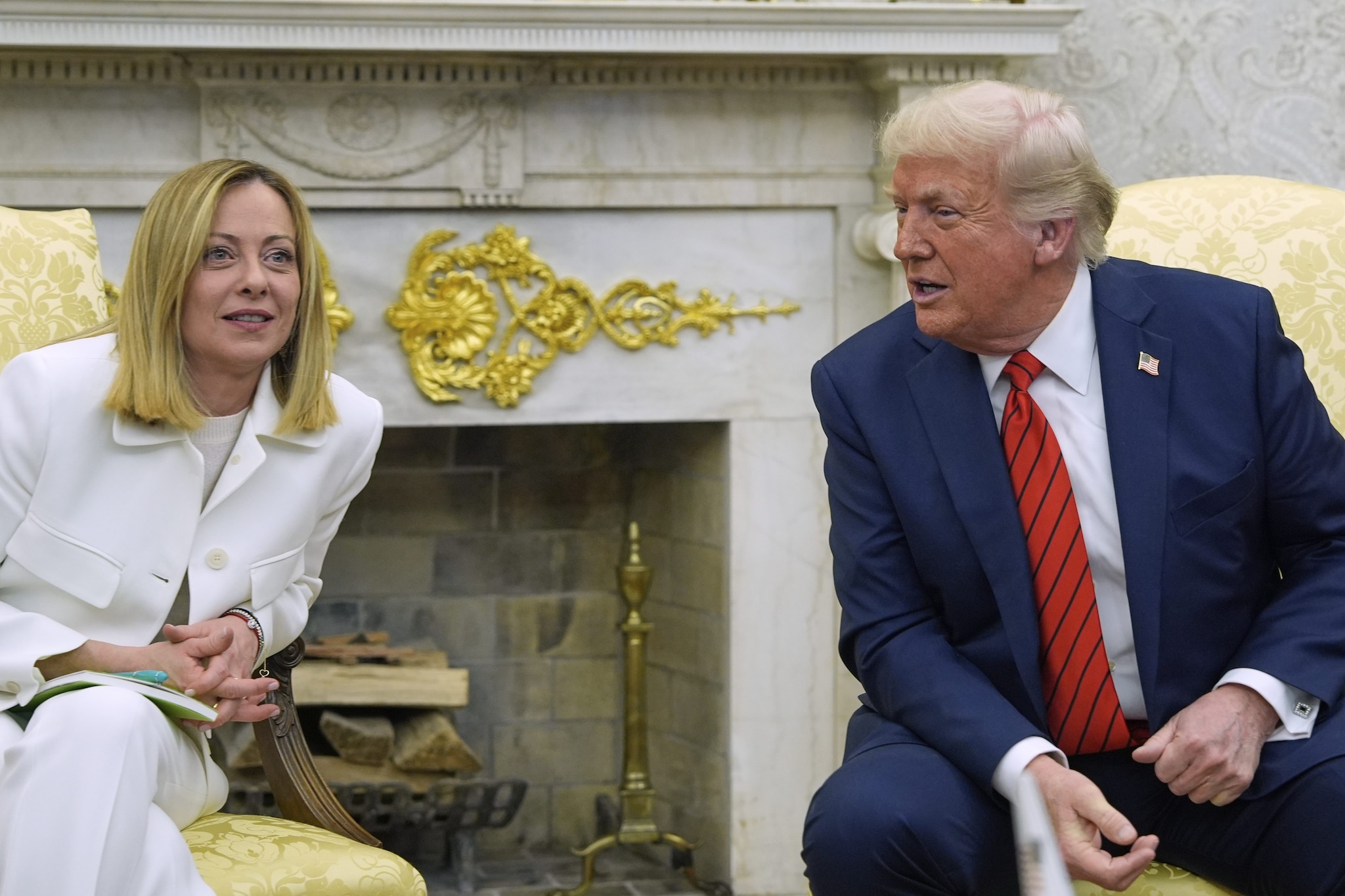
Il commento della Premier Meloni per quello che riguarda l’incontro del 17 Aprile 2025 è di quelli di rito: “Con Trump confronto leale e costruttivo”. Sui social, oramai un canale accreditato di comunicazione politica, la stessa Meloni ha aggiunto quello che potremmo definire lo slogan emerso da questo confronto: “Lavorare insieme per costruire un Occidente più forte”. Un laconico aforisma, se non addirittura una parola d’ordine, un mantra, con il quale la stessa ha voluto offrire un bilancio programmatico e consuntivo di questo meeting che ha definito “Un confronto leale e costruttivo su temi strategici: dalla sicurezza alla difesa, dalla lotta all’immigrazione illegale ai rapporti commerciali” nel corso del quale ha colto l’occasione per invitare Trump a Roma, invito che è stata lieta di poter comunicare essere stato prontamente accolto di buon grado dall’astuto leader statunitense in quanto questo, a suo dire, “Sarà un’ulteriore occasione per rafforzare il dialogo tra le nostre nazioni”.
Visibilmente soddisfatta, a ragione, per aver portato a compimento il proprio salto dal carro di Biden a quello di Trump senza incorrere in pericolose ed imbarazzanti plateali prese di posizione, non ha giustamente potuto esimersi dal dichiarare che alla luce dei fatti, per come da lei letti, “l’Italia è sempre più protagonista in uno scenario internazionale che cambia rapidamente. E oggi, anche grazie al lavoro fatto in questi anni, il nostro punto di vista viene ascoltato e rispettato” cosicché “Il legame tra Italia e Stati Uniti resta solido, vitale e decisivo per affrontare insieme le grandi sfide globali”.
Ad integrazione dell’incontro della Meloni con Trump a Washington, ecco che il 18 Aprile il Vicepresidente USA Vance è andato a Roma per una visita della Capitale dove ha avuto modo di incontrare a sua volta la Premier a Palazzo Chigi per continuare il dialogo sui dazi, e non solo, in vista di un possibile incontro con i vertici dell’Unione Europea: una eventualità che Trump ha dichiarato di avere intenzione di voler prendere in esame ed inserire in agenda allorché pianificherà la sua visita in Italia, per provare davvero a chiudere quell’accordo sui dazi che la Meloni e lui stesso si sono dichiarati convinti si farà “al 100%”.
Un convincimento che poggia su solide basi visto che, stando a quanto emerso e riportato da un comunicato ANSA del 17 Aprile, le aziende italiane, come dichiarato dal Premier italiano al Presidente americano nello Studio Ovale, investiranno 10 Mld di EUR negli Stati Uniti (pari a 11,374 Mld di USD) e l’Italia dovrà aumentare le importazioni di energia (LNG), oltre a sviluppare il nucleare: dati questi che a dire della stessa Meloni dimostrano che “le rispettive economie sono interconnesse”[1] (una osservazione a dir poco banale se fatta da chi, per il propio ruolo, dovrebbe avere se non altro la consapevolezza del significato della parola ‘globalizzazione’) anche se è da capire a vantaggio di chi, visto che queste dichiarazioni, alla luce dei fatti, suonano più che altro come la giustificazione della sua resa senza condizioni alle desiderata del Tycoon.
Se a questo aggiungiamo, poi, che la stessa Meloni si è impegnata ad alzare al 2% del PIL la spesa militare come richiesto dalla NATO, leggi dagli USA, dando corso ad all’incremento di un impegno finanziario (nel 2019 era pari all’1,22% del PIL) che ammonta ad un +10 Mld di EUR l’anno, una consistente quota dei quali sará per ovvie ragioni destinata ad incrementare le importazioni di armamenti da oltreoceano, viene da dire che le sperticate lodi di Trump a lei dedicate alla fine poggiano su un nulla di fatto che l’autorevole testata Bloomberg ha sintetizzato con l’esaustivo titolo di un suo pezzo curato da Donato Paolo Mancini e Kate Sullivan che testualmente recita “La Meloni si guadagna gli elogi di Trump ma se ne va con poca sostanza[2]” visto che a ben poco è servita quella che, giustamente, gli spietati Mancini e la Sullivan hanno descritto, poco lusinghieramente per un Premier, come “L’offensiva di charme di Giorgia Meloni alla Casa Bianca[3]”.
Alla fine per la maggior parte della conferenza stampa[4] di giovedì, che pare molti commentatori soprattutto italiani pare non abbiano ascoltato ovvero lo abbiano fatto con… ‘poca’ attenzione, la Meloni ha mantenuto un profilo decisamente basso intervenendo per lo più per elogiare il Presidente americano, ovvero per riproporre i suoi discorsi politici, come il sostegno alla sua lotta contro il woke e all'”ideologia della diversità, dell’equità e dell’inclusione” guadagnandosi un ban pagato “Tutti la amano e la rispettano, e non posso dire lo stesso di molte persone (ndr. chiaro riferimento al Presidente ucraino Volodymyr Zelenskyy)” aggiungendo un “Direi che ha preso d’assalto l’Europa” che ha fatto da prologo a quanto risposto alla domanda se pensasse che l’Italia potesse essere il “miglior” alleato degli Stati Uniti in Europa: “Solo se il primo ministro rimane il primo ministro può essere il nostro miglior alleato. Sta facendo un ottimo lavoro. È una persona fantastica e sta facendo un ottimo lavoro e le nostre relazioni sono ottime”[5].
D’altro canto chiunque si sarebbe stupito del contrario, nulla potendo essere diverso da ciò che si è visto andare in scena a Washington dove la Premier Meloni, uno dei tanti trasformisti bipartisan che hanno calcato le scene della politica estera italiana che, pur di restare a galla (perché solo di questo si è trattato visto che la diplomazia è altra cosa), ha offerto uno spettacolo sicuramente indecoroso quantunque a sua discolpa, come del resto pure di quelli che l’hanno preceduta via via negli anni passati, non si può non tenere conto del nullo peso dell’Italia sullo scacchiere mondiale e della sua oltremodo limitata sovranità conseguente da una umiliante sconfitta militare patita a seguito della partecipazione alla WWII chiusa sottoscrivendo una resa senza condizioni di cui, a forza di retoriche circa il 25 Aprile, nessuno parla perché pressoché nessuno ne conosce il testo.
Sconfitta e relativa resa che ben ci ricordano le circa 120 basi militari americane, alcune delle quali integrate in basi NATO, altre caratterizzate dalla presenza di armi nucleari, tutte non sotto la sovranità italiana e che per questo rendono l’Italia un Paese a sovranità limitata, per non dire nulla, in politica estera: un qualcosa che è emerso a chiare lettere ora e non in passato solo in quanto mai in precedenza era accaduto che nel breve volgere dì quattro anni la politica estera statunitense mutasse così rapidamente da rendere impossibile a chiunque sedesse a Palazzo Chigi di adattarsi prontamente ad essa senza avere il tempo materiale per mutare le proprie certezze dichiarate, i propri principi dichiarati ed i propri valori dichiarati incrollabili senza dare troppo nell’occhio, come è ora accaduto nel mattatoio mediatico di Washington: quello Studio Ovale dove poche settimane fa ha dato, tutto sommato, migliore prova mediatica di sé il Presidente ucraino, nonostante la messa alla porta.
Ovviamente sempre che tutto quanto avvenuto tra Trump, Vance e Zelenskyy non sia stato altro che una messinscena, ovverosia un qualcosa coerente con quanto ipotizzato e dichiarato da Friedrich Merz dopo la vittoria alle elezioni dello scorso 23 Febbraio, allorché definí l’alterco del famoso venerdì nero del Presidente ucraino nello Studio Ovale una “escalation preparata[6]“. Un sospetto, questo, legittimamente espresso ai primi di Aprile nel corso di una conferenza stampa ad Amburgo affermando che dal suo punto di vista non si sarebbe trattato di una reazione spontanea agli interventi di Zelensky, ma di un contenzioso montato ad arte”.
Una affermazione, questa, cui Merz aveva fatto seguire un sua dichiarazione di intenti espressa con le seguenti parole: “Ora dobbiamo dimostrare di essere in grado di agire in modo indipendente in Europa[7]“. In altri termini, il leader della CDU, aveva espresso l’opinione che l’incidente, trasmesso in presa diretta, e “segnato dalla brutalità” era scaturito “dal desiderio di umiliare, con l’obiettivo di far piegare il presidente ucraino Volodymyr Zelenskyy attraverso le minacce, in modo che cedesse alle richieste dei suoi aggressori[8]“.
Una lettura legittima, quella di Merz che lasciava intendere, anche se in modo sibillino, un’attenzione del tutto particolare per il Presidente ucraino, per di più confermata da quella relativa alla necessità che l’Europa faccia finalmente la propria parte che in tanti il 14 Aprile avranno messo in relazione con la dichiarazione che non poco ha indignato il Cremlino come riportato dal portavoce della Presidenza russa, Dmitry Peskov in più occasioni: la recente apertura del cancelliere in pectore tedesco alla consegna a Kyiv dei missili da crociera sempre osteggiata dal governo Scholz, ovverosia di quei missili Taurus che potrebbero quindi, in linea di principio, arrivare in Ucraina dopo che, per molto tempo, la Cancelleria ha escluso questa opzione[9].
Una mossa strategica, quella di Merz, per assecondare il bluff di Trump e guadagnare punti ai suoi occhi scavalcando la Meloni mostrando alla White House di avere capacità di lettura dei fatti di gran lunga superiori qualora la sua ipotesi fosse corretta, o un tentativo di candidarsi alla leadership europea in questa delicata fase pseudo-bellicista che vede saldamente al comando del gioco quel Starmer che difficilmente punta ad un vero conflitto con Mosca che indebolirebbe l’Occidente, per somma non solo promuovendo un rafforzamento del legame tra Putin e Xi Jinping, ma pure esponendo gli Stati Uniti al rischio di non poter mettere saldamente le mani in sicurezza –la sua sicurezza non quella di Kyiv– sui materiali strategici ucraini di cui abbisogna, a cui mai rinuncerebbe e che ritiene di aver già pagato con le forniture di armi?
La domanda è a dir poco legittima e si giustifica con la lettura che è stata data alla stampa del bombardamento di Sumy definito da Trump, come riportato dalla CNN, un “errore della Russia[10]“ (interessante notare che alla richiesta di chiarire cosa intendesse con “errore” della Russia, Trump ha risposto: “Hanno commesso un errore. Credo che sia stato… senti, chiediglielo pure[11]“, di fatto implicitamente avvalorando la tesi di Mosca che ha accusato Kyiv di aver usato i civili come scudi umani per proteggere un legittimo obiettivo militare); nonché, sempre da parte di Trump, della rottura della tregua Pasquale (riguardo alla quale l’inquilino attuale della White House ha opposto un fiducioso roboante molto eloquente silenzio), cui ha dato platealmente corso uno Zelenskyy a ciò sicuramente motivato dalla illusoria prospettiva di un sostegno incondizionato degli ‘amici’ europei, quantunque senza la benché minima possibilità di un reale successo, visto che è consistita di centinaia di episodi che hanno avuto luogo lungo un fronte per lui ingestibile sia per la eseguitá di uomini che di mezzi.
Un articolato evento, questo secondo episodio, che ha dato al Presidente USA la possibilità di ribadire con il suo summenzionato silenzio quanto riportato dalla CNN un paio di giorni fa, e cioè che gli Stati Uniti “rinunceranno” alla mediazione per ulteriori colloqui tra Russia e Ucraina se Mosca o Kyiv (classico colpo al cerchio ed alla botte oltremodo diplomatico) “renderanno molto difficile” il raggiungimento di un accordo di pace[12], un concetto cui andiamo ad aggiungere quanto affermato da Rubio che, di fatto contestualmente a Trump, ha dichiarato per parte sua “Non continueremo con questa impresa per settimane e mesi” in quanto gli Stati Uniti hanno “altre priorità su cui concentrarsi[13]“.
Due episodi che a ben vedere hanno contribuito non poco a dare ampia possibilità a Trump di:
- far apparire al mondo l’Ucraina come un pericoloso attentatore della Pace globale, e quindi alla prova dei fatti dare forza al suo duro attacco al Presidente ucraino di qualche settimana fa a Washington:
- ribadire la poca voglia di Washington di giungere ad un conflitto con Mosca generato da quella che ha definito “la guerra di Biden[14]”, e quindi di rassicurare Putin circa la genuinità del nuovo corso della propria politica estera USA nei confronti di un Cremlino che ha sicuramente bisogno di nuove relazioni internazionali con gli Stati Uniti per evidenti ragioni strategiche, ma in un contesto rassicurante date le più che evidenti conseguenze che il passo auspicato da Trump comporterebbe.
Detto per inciso vi sarebbe stata anche una terza ipotesi per la proiezione di Merz di cui sopra, quella sulla quale il Presidente Ricardo Baretzky dell’ECIPS, l’Agenzia dell’Unione Europea per l’Intelligence e la Sicurezza, ha ritenuto di richiamare l’attenzione dello stesso Merz per invitarlo ad astenersi dall’avviare l’Unione Europea sul sentiero finale della guerra in ossequio a una qualche sua velleitaria ipotetica proiezione militarista ben poco attuale: una ipotesi che andava considerata, ed adeguatamente stigmatizzata come giustamente fatto dal Presidente Baretzky, ma che reputo decisamente improbabile[15], anche se, ad onor del vero, durante la campagna elettorale, Merz aveva promesso di unire l’Europa di fronte alle sfide provenienti sia dalla Russia che dagli Stati Uniti.
Una posizione quest’ultima, condivisibile a patto di intendersi sul perché e pure sul come, nonché avendo ben presente che Alice Weidel, co-leader dell’AfD e una delle sue sfidanti, tra le richieste presentate con il proprio programma ha inserito la revoca immediata delle sanzioni contro la Russia e la cessazione delle forniture di armi all’Ucraina[16].
A fronte di tutto questo nasce spontaneo domandarci se la Premier Meloni sia stata adeguatamente edotta riguardo a tali fatti, circostanze ed ipotesi, se si in che misura ed in questo senso quale reale uso abbia inteso, o ancora intenda farne nell’interesse dell’Italia e dell’Occidente alla cui ricostruzione ha inteso candidarsi.
Ed infatti come non notare con una certa apprensione quanto accaduto a Washington allorché la Meloni ha dovuto rispondere ad una domanda sull’Ucraina?
Guardando il video della conferenza stampa chiunque può notare come, avendo la Meloni risposto in italiano, ed avendo Trump chiesto la traduzione, abbiamo che le immagini ci mostrano una Premier oltremodo imbarazzata che si passa una mano sulla fronte e subito dopo interrompe l’interprete per potersi rivolgere direttamente a Trump in inglese per non rischiare di perdere il suo proverbiale …’equilibrismo’: un ‘equilibrismo’ tutto proteso a non far capire cosa pensi della Russia e cosa dell’Ucraina, cercando, con scarso successo, di adeguarsi senza strisciare: una cosa, questa, che tuttavia non è sfuggita a coloro che fuori dell’Italia hanno osservato il tutto, a cominciare dalla CNN[17] che ha commentato la cosa scrivendo: “Quando Trump ha iniziato ad attaccare Zelensky durante il loro incontro di giovedì, dichiarando di ‘non essere un grande fan del presidente ucraino, Meloni ha scelto di non intervenire. E mentre definiva il presidente russo Vladimir Putin l’invasore , rispondendo in italiano a una domanda su chi fosse il responsabile della guerra, ha interrotto l’interprete a metà frase prima che la dichiarazione potesse essere letta ad alta voce in inglese affinché Trump potesse sentire. ‘Lo farò’, ha detto al traduttore, continuando a ripetere in inglese ciò che aveva appena detto riguardo all’aumento della spesa per la difesa dell’Italia, ma tralasciando la sua risposta su Putin”.
Alla fine ha parlato di pace giusta, che di fatto vuol dire tutto e niente, soprattutto considerando che solo fino a poco tempo fa è stata proprio lei ad offrire a Zelenskyy il suo incrollabile sostegno tanto prima dello scontro di Zelenskyy con Trump[18] che dopo, in occasione dell’incontro dei primi di Marzo 2025 convocato da Starmer a Londra[19].
“Malo esse quam videri” è una frase latina il cui significato letterale, “preferire essere piuttosto che sembrare”, ben si presta a fare da cappello introduttivo al freddo bilancio che qui propongo del recente incontro tra la Premier Meloni ed il 47° Presidente statunitense.
Incontro i cui esiti, per come sono stati presentati dalla stampa italiana, sono stati alquanto sopravvalutati in primo luogo per quello che riguarda gli aspetti economici che non sono stati neppure presi in considerazione, cosa del resto comprensibile anche se inaccettabile dati alla mano, ma la cui mancata disamina rischia di tradursi a breve in tutta una serie di amare sorprese che non tarderanno a penalizzare non poco lo stato di salute non solo dell’Italia, ma dell’intera Europa che dubito perdonerà alla Meloni di aver agito di fatto palesemente senza una concertazione ponendosi come un vero e proprio cavallo di Troia che qualcuno all’estero ha già stigmatizzato parafrasando il MAGA trumpiano con un poco credibile MIGA: Make Italy Great Again.
Come noto la frase latina su menzionata sottolinea l’importanza dell’essere piuttosto che dell’apparire: un concetto che incoraggia l’integrità e l’onestà, suggerendo che è meglio essere stessi, anche se ciò significa non essere percepiti in modo positivo, piuttosto che cercare di sembrare qualcun altro per ottenere l’approvazione degli altri. In Italia, “esse quam videri” è stato adottato come motto da diverse istituzioni, come la Guardia costiera ausiliaria anche Niccolò Machiavelli, nel suo “Principe”, ha proposto il concetto opposto, “videri quam esse”, cioè “sembrare più che essere”, come strategia per un principe che desidera mantenere il potere: peccato che in questo contesto quel Principe non è certamente identificabile con quella Giorgia Meloni che forse meglio farebbe a colmare certe lacune culturali inaccettabili nell’attuale momento storico.
Tanto affermo in quanto anche qualora una concertazione ci fosse stata con la Presidente von der Leyen e questa avesse dato il suo personale via libera, le cose per l’Italia non sarebbero migliori in quanto quell’ipotetico ok giustificativo di una scelta comunitaria in linea con quella italiana potrebbe essere presentata dalle Cancellerie degli altri partner comunitari come una conseguenza della unilaterale scelta del Governo italiano, reo di aver assunto decisioni che hanno messo tutti gli altri Governi nella condizione di non poter fare altro che adeguarsi per evitare conseguenze peggiori e tra questi una guerra commerciale intestina.
A conti fatti, allo stato attuale, accantonato il piano politico che da tutto quanto qui riportato emerge per essere decisamente ben poco lusinghiero ovvero, nella migliore delle ipotesi, fumoso e, come si dice in questi casi, in via di definizione, ecco che il solo risultato netto dell’incontro-confronto Meloni-Trump è stato quello relativo all’ambito economico (ché del danno di immagine e dei rischi abbiamo già detto) il cui esito può essere così riassunto: se a fronte dell’impegno a suo dire profuso per difendere i 45 Mld di USD di surplus commerciale con gli Stati Uniti (le esportazioni italiane ammontano a 65 Mld di EUR l’anno) dobbiamo tenere conto di quanto finanziariamente messo or ora in gioco dall’Italia pro interessi strategici USA, un quanto che si può banalmente stimare attorno ai 20 Mld di EUR (pari a circa 22,6 Mld di USD, a partire dai 10 Mld di EUR di investimenti di cui sopra), si ha che il saldo netto paga una perdita netta pari al 50% del testé menzionato surplus.
A tanto, alla fine, ammonta il prezzo pagato dall’Italia tutta per una manciata di complimenti a ben guardare del tutto inutili visto che perfino la CNN ha di fatto bollato la performance della Meloni scrivendo di come le siano sì bastate un paio di frasi per far capire al suo ospite di essere un’anima gemella, ma che questo risultato è stato conseguito, da, per certo, perfetta adulatrice, “utilizzando alcune delle parole in codice preferite dal presidente Donald Trump per descrivere la sua battaglia contro quelli che considera gli ideali progressisti impazziti[20]“.
In altri termini ponendo in essere un tentativo, definito dalla CNN[21] “poco sottile”, “di chiarire fin dall’inizio che non era il tipo di leader europeo che Trump ha ospitato nella stessa stanza nel corso degli ultimi due mesi”, tentativo che non ha sortito migliore accoglienza di quella che ha riservato la stessa CNN[22] alla sua dichiarazione di intenti espressa dicendo “Il mio obiettivo è rendere di nuovo grande l’Occidente (…) E penso che possiamo farcela insieme”, visto che il commento proposto è stato “Se questa sia l’ambizione di Trump è un’altra questione. L’Europa non è certo una priorità per Trump. Nella misura in cui presta attenzione – sul commercio e sulla guerra in Ucraina – è stato aspramente critico, insinuando che il continente abbia trascorso gli ultimi decenni a complottare per ‘fregare’ gli Stati Uniti”.
Cosa che del resto, da abile imprenditore quale è, dubito che Trump non si sia accorto sia stato posto in essere per l’occasione dalla sicuramente meno abile Meloni che è auspicabile non si bei troppo dei poco avveduti commenti positivi con cui il tutto è stato accolto dalla stampa italiana dove vi è stato chi ha addirittura parlato di “ritorno dell’asse atlantico” facendosi forte delle parole con cui Trump l’ha accolta alla White House descrivendo la sua azione parlando di una leadership giovane, decisa e perfettamente inserita nei nuovi equilibri globali.
Per certo a Washington abbiamo assistito alla messa in scena di un nuovo equilibrio geopolitico che parla la lingua dell’interesse nazionale e dell’Occidente coeso, anche se purtroppo tocca constatare che l’interesse coeso in questione pare essere decisamente solo quello statunitense anche se passa, ma solo strumentalmente e sicuramente pro tempore, per l’avere a Roma un leader che condivide la sua ostilità verso gli ideali liberali: un’opportunità di non poco conto per Trump in un momento in cui i legami transatlantici sono tesi fino al punto di rottura, ma che non presuppone che da ciò possa derivare, visti i presupposti, un qualche vantaggio concreto per l’Italia.
Va da sé che è oltremodo significativo, e dovrebbe essere pure preoccupante, che l’attuale leader della Commissione Europea, Ursula von der Leyen, nonostante i ripetuti tentativi, non sia sin qui riuscita a ottenere un incontro o un anche solo un colloquio con Trump da quando ha assunto l’incarico, questo stando a quanto affermato dai funzionari europei: una circostanza che gli stessi funzionari hanno ritenuto sia imputabile alla forte vicinanza della von der Leyen a Biden sulla questione ucraina, vicinanza che al momento non è dato capire perché non sia stata ascritta pure a quella Meloni che i funzionari dell’amministrazione di Joe Biden, come del resto lo stesso Biden, hanno accolto con piacevole sorpresa allorché la stessa ha manifestato a più riprese il suo personale fermo sostegno all’Ucraina, per somma elogiandone pure la gestione del G7 nel 2024.
Tutti elementi che sarebbe interessante capire come mai Trump non abbia ritenuto di prendere in considerazione: una scelta che è lecito ritenere sia ascrivibile ad una diversa valutazione e peso attribuito a quella vicinanza al suo predecessore di cui sopra.
Una valutazione sintetizzabile con la semplice osservazione che mentre la Meloni è palesemente un’opportunista politico, di fatto euroscettica e populista, saltata sul carro di Biden così come ora su quello di Trump solo per interessi di bottega domestici (da qui la frase del Presidente statunitense circa il poter essere l’Italia il miglior alleato USA “Solo se il primo ministro rimane il primo ministro”), la von der Leyen, da decisa europeista dei suoi tempi d’oro (si pensi all’appoggio dato alle politiche di integrazione europea così come al Trattato di Aquisgrana franco-tedesco, tanto per citare), si è mutata in fervida atlantista pro Biden forse solo obtorto collo per le vicende legate a quanto da più parti imputatole per la gestione dell’affaire vaccini, ed in questo senso non gestibile come l’Italiana, giusti o sbagliati che siano i suoi ideali.
In questo senso il fatto che gli oppositori della Meloni in Italia la accusino di doppiezza nel cercare di ingraziarsi sia Washington che Bruxelles è una sorta di riprova della sua capacità di mantenere relazioni sia con i leader europei sia con gli Stati Uniti, una capacità che a Trump all’occorrenza potrebbe tornare utile e come tale va tenuta in serbo considerandola una risorsa.
Si poteva fare di meglio a Washington? Probabilmente no, anche se, date le circostanze, meglio sarebbe stato evitare di esporre l’Italia al ridicolo rilasciando dichiarazioni d’intenti alquanto vanagloriose visto che a livello internazionale è acclarato che il suo potere di ottenere l’esenzione dai dazi del 20% minacciati da Trump è limitato dal momento che qualsiasi nuovo accordo commerciale dovrebbe essere negoziato tra Washington e i funzionari della EU a Bruxelles, funzionari che ben poche informazioni hanno ottenuto, e quelle poche affatto chiare, su ciò che Trump cerca da un nuovo accordo, come del resto reso noto dal capo negoziatore commerciale della EU che ha lasciato l’incontro di lunedì con il Segretario al Commercio Howard Lutnick e il Rappresentante per il Commercio Jamieson Greer.
Un caso? Idee poche e ben confuse? Non direi proprio e questo per due ragioni delle quali:
- la prima discende dalla semplice presa in considerazione del fatto che la strategia di Trump pare essere quella di chi ama disorientare l’avversario perturbando il sistema con mosse apparentemente contraddittorie che hanno un denominatore comune: disorientano, appunto, l’avversario non dando, per somma, alla controparte il tempo per concertare una reale risposta coordinata efficace. La riprova l’abbiamo prendendo in esame propio la questione dei dazi applicati all’Europa che ha sortito un decisamente brillante effetto: quello di spezzare il fronte europeo giocando la carta del presunto rapporto particolare, quasi privilegiato con l’Italia, ed in particolare con il suo ambizioso Premier che in cambio di una maggiore visibilità e prestigio ha di fatto concesso a Trump ciò che egli ha posto da subito come condizione per rimuovere le nuove tariffe: ridurre il surplus commerciale ed ottenere investimenti nel suo Paese da parte di coloro (Stati ed imprese) che intendono esportare negli USA, ovverosia esattamente ciò che la Premier Meloni ha rassicurato sarà fatto nel momento stesso in cui la White House dichiarava bellamente la trattativa commerciale con la EU non una sua priorità; e
- la seconda è desumibile dallo strano comportamento degli USA nella vicenda ucraina. Come noto Trump ha dichiarato a più riprese di voler chiudere il proprio coinvolgimento nel conflitto ucraino aprendo a Mosca ed arrivando persino a mettere alla porta Volodymyr Zelenskyy allorché quest’ultimo si è rifiutato, a Washington, di sottoscrivere l’accordo economico con gli Stati Uniti relativo allo sfruttamento delle terre rare presenti nel sottosuolo del suo Paese nel momento in cui il Presidente USA si è rifiutato di aderire alla sua, tutto sommato, comprensibilissima richiesta di un preciso impegno da parte degli Stati Uniti di una copertura strategica, richiesta rigettata con sdegno da Trump, ma stranamente prontamente accolta dal Regno Unito che prontamente si è fatto interprete delle desiderata di Kyiv nell’incontro tenutosi a Londra di lì a qualche giorno. Un incontro dai toni decisamente diversi che di fatto hanno rappresentato una apparente presa di posizione decisamente contraria a quella statunitense che ha contribuito a far alzare i toni da parte del Governo ucraino senza che per questo Trump si pronunciasse contro questa interferenza nei suoi piani strategici. Una cosa questa alquanto strana visto il carattere del Tycoon, ma perfettamente comprensibile se si pensa ad un gioco delle parti posto in essere tra gli Stati Uniti e quel Regno Unito che pare proprio essere la reale controparte di Washington: il Regno Unito e non l’Italia.
Congetture? Tutto è possibile ed avere notizie di prima mano in tempo reale in un tale frangente in rapido divenire non è cosa facile, sicché meglio cercare di valutare tutte le possibili opzioni senza cullarsi troppo sui facili allori.
Se a tutto questo aggiungiamo che “La Federal Reserve e la BCE dovrebbero continuare a ridurre i tassi di interesse nei prossimi trimestri, sebbene a ritmi diversi l’uno dall’altro”, stando a quanto riportato dalla nuova edizione del World Economic Outlook[23] pubblicata il 22 Aprile dal Fondo Monetario Internazionale, il quadro risulta essere orientato ad assumere tinte ancora più fosche.
Ed infatti nel rapporto si può leggere che “Negli Stati Uniti si prevede che il tasso sui fondi federali scenda al 4% alla fine del 2025 e raggiunga il suo equilibrio di lungo termine del 2,9% alla fine del 2028”. I tassi negli Stati Uniti sono attualmente compresi nella forbice 4,25%-4,50% ed il 21 Aprile il presidente Donald Trump ha nuovamente attaccato il governatore Jerome Powell e chiesto una riduzione immediata del costo del denaro. Nell’area dell’euro l’IMF si attende un nuovo taglio dei tassi a portare il tasso sui depositi al 2% entro la meta’ dell’anno per una riduzione cumulativa, compresi i tre tagli già effettuati, di 100 punti base nell’anno, 50 in piu’ delle previsioni di Ottobre.
Tradotto in parole povere l’analoga misura della BCE e della FED, anche se apparentemente orientata a perseguire il giusto obiettivo di promuovere gli investimenti grazie all’abbassamento del costo del danaro, di fatto promette esiti differenti sulle due sponde dell’Atlantico visto che alla fine saranno ancora gli Stati Uniti il Paese in possesso dei migliori requisiti per attrarre capitali esteri spontanei, oltre a quelli rastrellati obtorto collo, beneficiando per somma di un apprezzamento della propria valuta, grazie alla riduzione dei tassi BCE, per tutto quello che riguarda gli scambi con una EU che sarà ulteriormente penalizzata sul fronte della bilancia commerciale
Interessante notare come per il Giappone si preveda “che i tassi di riferimento vengano aumentati a un ritmo simile a quello ipotizzato nell’ottobre 2024, aumentando gradualmente nel medio termine verso un livello neutrale di circa l’1,5%, coerente con il mantenimento dell’inflazione e delle aspettative di inflazione ancorate all’obiettivo del 2% della Banca del Giappone”: una informazione, questa, che dovrebbe far riflettere non poco su quello che sta accadendo nell’area del Pacifico, un’area che dovrebbe essere presa in maggiore considerazione per capire certe scelte strategiche USA con riferimento all’area a noi prossima: quella dell’Atlantico anche per domandarci il perché della dichiarazione di Trump quanto ai dazi applicati alla Cina, evitando facili banali ipotesi, che ha ipotizzato di ridurre significativamente[24], visto che a pagare saranno in buona misura gli Europei.
Le prove di duopolio per il New World Order continuano.
————————————————————————————
MELONI-TRUMP MEETING: A SUCCESS?
THE MYTH OF A ‘WASHINGTON-ROME’ AXIS
PM Meloni’s comment regarding the April 17, 2025 meeting is one of the usual ones: “With Trump fair and constructive confrontation.” On social media, now an accredited channel of political communication, Meloni herself added what we might call the slogan that emerged from this confrontation: “Working together to build a stronger West.” A laconic aphorism, if not actually a watchword, a mantra, with which she wanted to offer a programmatic and consumptive balance sheet of this meeting, which she called “A fair and constructive confrontation on strategic issues : from security to defense, from the fight against illegal immigration to trade relations” during which she took the opportunity to invite Trump to Rome, an invitation she was pleased to report was readily welcomed by the astute U.S. leader as this, in her words, “Will be another opportunity to strengthen the dialogue between our nations.”
Visibly pleased, with good reason, to have completed her own leap from the Biden bandwagon to the Trump bandwagon without incurring dangerous and embarrassing blatant posturing, she could not rightly refrain from declaring that in light of the facts, as she read them, “Italy is increasingly a protagonist in a rapidly changing international scenario. And today, thanks in part to the work done in recent years, our point of view is being heard and respected” so that “the bond between Italy and the United States remains solid, vital and decisive in facing together the great global challenges.”
Complementing Meloni’s meeting with Trump in Washington, here is that on April 18 U.S. Vice President Vance went to Rome for a tour of the capital where he in turn was able to meet with the PM at Palazzo Chigi to continue the dialogue on tariffs, and more, with a view to a possible meeting with the EU leadership: an eventuality that Trump has said he intends to consider and put on the agenda when he plans his visit to Italy, to really try to close that deal on duties that Meloni and himself have said they are convinced will be done “100 percent.”
A conviction that rests on solid foundations given that, according to what emerged and was reported in an ANSA statement on April 17, Italian companies, as declared by the Italian PM to the American President in the Oval Office, will invest EUR 10 BILLION in the United States (equivalent to USD 11.374 BILLION) and Italy will have to increase energy imports (LNG), in addition to developing nuclear power: data these that in Meloni’s own words demonstrate that “the respective economies are interconnected” (an observation that is trivial to say the least when made by one who, by virtue of his role, should have if nothing else an awareness of the meaning of the word ‘globalization’) although it is to be understood to whose advantage, given that these statements, in light of the facts, sound more like a justification for his unconditional surrender to the Tycoon’s wishes.
If we add to this, then, that Meloni herself has pledged to raise military spending to 2 percent of GDP as requested by NATO, read by the U.S., giving way to the increase of a financial commitment (in 2019 it was 1.22 percent of GDP) that amounts to a +10 BILLION EUR per year, a substantial share of which will be for obvious reasons destined to increase arms imports from overseas, it comes to say that Trump’s lavish praise of her ultimately rests on a nullity that the influential Bloomberg news outlet summed up with the exhaustive headline of a piece of its own edited by Donato Paolo Mancini and Kate Sullivan, which verbatim reads “Meloni earns Trump’s praise but walks away with little substance ” since little use was made of the one that, rightly, the ruthless Mancini and Sullivan described, unflatteringly for a PM, as “Giorgia Meloni’s charm offensive at the White House.”
In the end for most of Thursday’s press conference, which it seems many commentators especially Italians apparently did not listen to or did so with … ‘little’ attention, Meloni kept a decidedly low profile intervening mostly to praise the American President, i.e., to rehash her political speeches, such as her support for his fight against woke and the “ideology of diversity, equity and inclusion” earning a paid ban “Everyone loves and respects her, and I can’t say the same about many people (ed. clear reference to Ukrainian President Volodymyr Zelenskyy)” adding a “I would say he has taken Europe by storm” that served as prologue to his response to the question of whether he thought Italy could be the U.S.’s “best” ally in Europe: “Only if the prime minister remains the prime minister can he be our best ally. He is doing a great job. He is a great person and he is doing a great job and our relations are very good” .
On the other hand, anyone would have been astonished otherwise, nothing being able to be different from what was seen going on in Washington where PM Meloni, one of the many bipartisan transformers who have trod the scenes of Italian foreign policy who, in order to stay afloat (because that was all it was about since diplomacy is something else), offered a spectacle that was certainly unseemly quantum albeit to her credit, as well as those who have preceded it gradually in past years, one cannot overlook Italy’s null weight on the world chessboard and its exceedingly limited sovereignty resulting from a humiliating military defeat suffered as a result of its participation in WWII closed by signing an unconditional surrender of which, by dint of rhetoric about April 25, no one is talking about because almost no one knows the text.
Defeat and relative surrender that well reminds us of the approximately 120 U.S. military bases, some of which are integrated into NATO bases, others characterized by the presence of nuclear weapons, all of which are not under Italian sovereignty and therefore make Italy a country with limited sovereignty, to say nothing, in foreign policy: something that has come to the fore now and not in the past only in that never before had it happened that in the short span of four years U.S. foreign policy changed so rapidly as to make it impossible for whoever sat in Palazzo Chigi to adapt readily to it without having the material time to change their stated certainties, their stated principles and their stated unwavering values without giving too much away, as has now happened in the media slaughterhouse in Washington: that Oval Office where just a few weeks ago the Ukrainian president gave, all things considered, better media proof of himself, despite being thrown out the door.
That is, of course, assuming that everything that took place between Trump, Vance and Zelenskyy was nothing more than a sham, that is, something consistent with what Friedrich Merz speculated and declared after his election victory last Feb. 23, when he called the Ukrainian president’s famous Black Friday altercation in the Oval Office a “prepared escalation.” A suspicion, this one, legitimately expressed in early April during a press conference in Hamburg stating that from his point of view it would not be a spontaneous reaction to Zelensky’s interventions, but an artfully mounted dispute.”
A statement, this, which Merz had followed up with his own declaration of intent expressed in the following words, “We must now show that we are able to act independently in Europe.” In other words, the CDU leader, had expressed the view that the incident, broadcast live, and “marked by brutality” had stemmed from “the desire to humiliate, with the aim of making Ukrainian President Volodymyr Zelenskyy bend through threats, so that he would yield to the demands of his aggressors.”
A legitimate reading, that of Merz’s that hinted, albeit in a sibylline way, at an altogether special concern for the Ukrainian president, moreover confirmed by the one concerning the need for Europe to finally do its part that so many on April 14 will have related to the statement that not a little outraged the Kremlin as reported by the spokesman for the Russian presidency, Dmitry Peskov on several occasions: the recent openness of the German chancellor-in pectore to the delivery to Kyiv of the cruise missiles always opposed by the Scholz government, namely those Taurus missiles that could then, in principle, arrive in Ukraine after, for a long time, the Chancellery had ruled out this option .
Either a strategic move, Merz’s, to go along with Trump’s bluff and gain points in his eyes by overruling Meloni by showing the White House that she has far superior fact-reading skills should her hypothesis be correct, or an attempt to run for European leadership in this delicate pseudo-Bellicist phase that sees firmly in command of the game that Starmer who is unlikely to aim for a real conflict with Moscow that would weaken the West, for sum not only by promoting a strengthening of the bond between Putin and Xi Jinping, but also by exposing the United States to the risk of not being able to put its hands firmly in security -its security not Kyiv’s- on the Ukrainian strategic materials it needs, which it would never give up and which it believes it has already paid for with arms supplies?
The question is a legitimate one, to say the least, and is justified by the reading in the press of the Sumy bombing described by Trump, as reported by CNN, as a “mistake by Russia ” (Interestingly, when asked to clarify what he meant by Russia’s “mistake,” Trump replied, “They made a mistake. I think it was … look, go ahead and ask them, ” in fact implicitly corroborating Moscow’s claim that he accused Kyiv of using civilians as human shields to protect a legitimate military target); as well as, again on Trump’s part, of the breaking of the Easter truce (about which the current White House tenant has opposed a confidently bombastic very eloquent silence), to which a Zelenskyy has blatantly given course no doubt motivated by the illusory prospect of unconditional support from European ‘friends,’ albeit without the slightest chance of real success, given that it has consisted of hundreds of episodes taking place along a front unmanageable for him in terms of both manpower and means executions.
An articulate event, this second episode, that gave the U.S. President the opportunity to reiterate with his aforementioned silence what CNN reported a couple of days ago, namely that the United States will “give up” mediating further talks between Russia and Ukraine if Moscow or Kyiv (classic blow to the circle and the barrel beyond diplomacy) “make it very difficult” to reach a peace agreement , a concept to which we go to add what Rubio said, who, in fact contextually to Trump, stated for his part “We will not continue with this endeavor for weeks and months” as the United States has “other priorities to focus on.”
Two episodes that, on closer inspection, contributed in no small part to giving Trump ample opportunity to:
- make Ukraine appear to the world as a dangerous bomber of Global Peace, and thus when tested give force to his harsh attack on the Ukrainian president a few weeks ago in Washington:
- to reiterate Washington’s unwillingness to come to a conflict with Moscow generated by what it has called “Biden’s war,” and thus to reassure Putin about the genuineness of the new course of its U.S. foreign policy vis-à-vis a Kremlin that certainly needs new international relations with the United States for obvious strategic reasons, but in a reassuring context given the more than obvious consequences that Trump’s desired step would entail.
Incidentally, there would also have been a third hypothesis for Merz’s projection mentioned above, the one to which President Ricardo Baretzky of ECIPS, the European Union Intelligence and Security Agency, saw fit to call Merz’s own attention to urge him to refrain from setting the European Union on the final path to war in deference to some vague hypothetical militarist projection of his own that is very much out of date: a hypothesis that had to be considered, and appropriately stigmatized as rightly done by President Baretzky, but which I consider decidedly unlikely , although, to be fair, during the election campaign, Merz had promised to unite Europe in the face of challenges from both Russia and the United States.
A position the latter, which can be shared as long as one understands why and even how, as well as having in mind that Alice Weidel, co-leader of the AfD and one of its challengers, among the demands presented with its program included the immediate lifting of sanctions against Russia and the cessation of arms supplies to Ukraine .
In the face of all this it arises spontaneously to wonder whether Premier Meloni has been adequately informed about these facts, circumstances and hypotheses, if so to what extent and in this sense what real use she intended, or still intends, to make of them in the interest of Italy and the West to whose reconstruction she intended to stand as a candidate.
And indeed, how can one not note with some apprehension what happened in Washington when Meloni had to answer a question about Ukraine?
Watching the video of the press conference anyone can notice how, Meloni having answered in Italian, and Trump having asked for a translation, we have that the images show us an overly embarrassed Premier who passes a hand over her forehead and immediately afterwards interrupts the interpreter in order to address Trump directly in English so as not to risk losing her proverbial …’balancing’: a ‘balancing act’ all bent on not making it clear what she thinks about Russia and what about Ukraine, trying, with little success, to comply without groveling: something, this, that nevertheless did not escape the notice of those outside Italy who observed the whole thing, starting with CNN, which commented on it, writing, “When Trump began attacking Zelensky during their meeting on Thursday, declaring that he ‘is not a big fan of the Ukrainian president, Meloni chose not to intervene. And while she called Russian President Vladimir Putin the invader , responding in Italian to a question about who was responsible for the war, she interrupted the interpreter mid-sentence before the statement could be read aloud in English for Trump to hear. ‘I will,’ he told the translator, continuing to repeat in English what he had just said about increasing Italy’s defense spending, but leaving out his answer about Putin.”
In the end she spoke of a just peace, which in fact means everything and nothing, especially considering that only until recently it was she herself who offered Zelenskyy her unwavering support both before Zelenskyy’s confrontation with Trump and afterwards, at the early March 2025 meeting convened by Starmer in London.
“Malo esse quam videri” is a Latin phrase whose literal meaning, “preferring to be rather than to seem,” lends itself well to serve as an introductory hat to the cold assessment I propose here of the recent meeting between PM Meloni and the 47th U.S. President.
A meeting whose outcomes, as they were presented by the Italian press, were somewhat overstated first of all with regard to the economic aspects that were not even taken into consideration, which is understandable even if unacceptable data in hand, but whose failure to be examined is likely to translate shortly into a whole series of bitter surprises that will not be long in penalizing in no small measure the state of health not only of Italy but of the whole of Europe, which I doubt will forgive Meloni for having in fact acted blatantly without consultation by posing as a veritable Trojan horse that someone abroad has already stigmatized by paraphrasing the Trumpian MAGA with a scarcely credible MIGA: Make Italy Great Again.
As is well known, the Latin phrase mentioned above stresses the importance of being rather than appearing-a concept that encourages integrity and honesty, suggesting that it is better to be oneself, even if it means not being perceived in a positive way, than to try to look like someone else in order to gain the approval of others. In Italy, “esse quam videri” has been adopted as a motto by various institutions, such as the Auxiliary Coast Guard even Niccolò Machiavelli, in his “Prince,” proposed the opposite concept, “videri quam esse,” that is, “to seem more than to be,” as a strategy for a prince who wishes to maintain power: too bad that in this context that prince is certainly not identifiable with that Giorgia Meloni who would perhaps do better to fill certain cultural gaps unacceptable in the current historical moment.
I say this because even if there had been a concertation with President von der Leyen and she had given her personal green light, things would not be any better for Italy since that hypothetical OK justifying a Community choice in line with the Italian one could be presented by the Chancelleries of the other Community partners as a consequence of the unilateral choice of the Italian government, guilty of having taken decisions that put all the other governments in the position of having no choice but to adapt in order to avoid worse consequences and among them an intestine trade war.
On balance, as things stand, setting aside the political plan, which from everything reported here emerges to be decidedly unflattering or, at best, vague and, as they say in these cases, in the process of being defined, here is that the only net result of the Meloni-Trump meeting-confrontation was that relating to the economic sphere (for of the image damage and risks we have already said) whose outcome can be summarized as follows: if, against the effort she said to have made to defend the USD 45Bn trade surplus with the United States (Italian exports amount to EUR 65Bn a year) we must take into account what Italy has now put into play financially pro US strategic interests, a sum that can be trivially estimated at around EUR 20Bn (equal to about USD 22.6Bn, from the EUR 10Bn of investments mentioned above), we have that the net balance pays a net loss equal to 50% of the aforementioned surplus.
That much, in the end, amounts to the price paid by Italy as a whole for a handful of, on closer inspection, completely useless compliments given that even CNN actually branded Meloni’s performance by writing about how it took her, yes, only a couple of sentences to make her host realize that she was a soul mate, but that this was achieved, as, to be sure, a perfect flatterer, by “using some of President Donald Trump’s favorite code words to describe his battle against what he considers progressive ideals gone mad.”
In other words by putting in place an attempt, described by CNN as “not very subtle,” “to make it clear from the outset that he was not the kind of European leader that Trump has been hosting in the same room over the past two months,” an attempt that was no better received than CNN’s own take on his statement of intent expressed by saying “My goal is to make the West great again (…) And I think we can do it together,” since the proposed comment was “Whether that is Trump’s ambition is another question. Europe is certainly not a priority for Trump. To the extent that he pays attention — on trade and the war in Ukraine — he has been harshly critical, insinuating that the continent has spent the last few decades plotting to ‘screw over’ the United States.”
Which by the way, as the skillful businessman that he is, I doubt that Trump did not realize was put in place for the occasion by the certainly less skillful Meloni who it is to be hoped does not take too much pleasure in the ill-advised positive comments with which the whole thing was received by the Italian press where there were even those who spoke of the “return of the Atlantic axis” making strong of the words with which Trump welcomed her at the White House describing her action by talking of a young, decisive leadership perfectly inserted in the new global balances.
To be sure, in Washington we have witnessed the staging of a new geopolitical equilibrium that speaks the language of the national interest and the cohesive West, although unfortunately we have to note that the cohesive interest in question seems to be decidedly only the U.S. interest even if it passes, but only instrumentally and certainly pro tempore, for having in Rome a leader who shares her hostility to liberal ideals: an opportunity of no small account for Trump at a time when transatlantic ties are strained to the breaking point, but one that does not assume that any concrete benefit for Italy can come from this, given the assumptions.
It goes without saying that it is beyond significant, and should also be of concern, that the current leader of the European Commission, Ursula von der Leyen, despite repeated attempts, has so far failed to get a meeting or even an interview with Trump since taking office, this according to European officials: a circumstance that the same officials believed was attributable to von der Leyen’s strong closeness to Biden on the Ukrainian issue, a closeness that at the moment it is not clear why it was not ascribed as well to that Meloni whom Joe Biden’s administration officials, as indeed Biden himself, welcomed with pleasant surprise when she repeatedly expressed her personal firm support for Ukraine, to say the least by praising even its handling of the G7 in 2024.
These are all elements that it would be interesting to understand why Trump has not seen fit to take into consideration-a choice that it is safe to assume is attributable to a different assessment and weight given to that closeness to his predecessor mentioned above.
An assessment that can be summarized by the simple observation that while Meloni is blatantly a political opportunist, de facto euroskeptic and populist, who jumped on the Biden bandwagon as well as now on the Trump bandwagon only for domestic vested interests (hence the U.S. president’s phrase about Italy being able to be the best U.S. ally “Only if the prime minister remains the prime minister”), von der Leyen from being a staunch pro-European of her heyday (think of her support for European integration policies as well as the Franco-German Treaty of Aachen, just to mention), has changed into an ardent pro-Biden Atlanticist perhaps only obtorto collo due to events related to what has been imputed to her by many for her handling of the vaccine affaire, and in this sense as unmanageable as the Italian, right or wrong her ideals.
In this sense, the fact that Meloni’s opponents in Italy accuse her of duplicity in trying to ingratiate herself with both Washington and Brussels is a kind of testament to her ability to maintain relations with both European and U.S. leaders, an ability that could come in handy to Trump if need be and as such should be held in reserve as an asset.
Could anything better have been done in Washington? Probably not, although under the circumstances, better would have been to avoid exposing Italy to ridicule by issuing rather boastful declarations of intent given that internationally it is well established that its power to gain exemption from Trump’s threatened 20 percent tariffs is limited since any new trade deal would have to be negotiated between Washington and EU officials in Brussels, officials who very little information has been obtained, and that little at all clear, about what Trump seeks from a new deal, as moreover made clear by the EU’s chief trade negotiator who left Monday’s meeting with Commerce Secretary Howard Lutnick and Trade Representative Jamieson Greer.
A case? Few and well-confused ideas? I would not say so, and this is for two reasons of which:
- the first descends from the simple consideration of the fact that Trump’s strategy seems to be that of someone who likes to disorient the opponent by disrupting the system with apparently contradictory moves that have a common denominator: they disorient, precisely, the opponent by not giving, for sum, the other side time to concert a real effective coordinated response. We have the proof of this by examining precisely the issue of the duties applied to Europe, which has had a decidedly brilliant effect: that of breaking the European front by playing the card of the alleged special, almost privileged relationship with Italy, and in particular with its ambitious Premier who, in exchange for greater visibility and prestige, has in fact granted Trump what he immediately set as a condition for removing the new tariffs: Reducing the trade surplus and obtaining investment in his country from those (states and companies) who intend to export to the U.S., i.e., exactly what PM Meloni reassured will be done at the very moment when the White House was blithely declaring trade negotiations with the EU not a priority of his; and
- the second can be inferred from the strange behavior of the US in the Ukrainian affair. As is well known, Trump has repeatedly declared that he wants to end his involvement in the Ukrainian conflict by opening up to Moscow and even going so far as to put Volodymyr Zelenskyy at the door when the latter refused, in Washington, to sign the economic agreement with the U.S. concerning the exploitation of rare earths in his country’s subsoil at the time when the U.S. president refused to join his own, all in all, very understandable request for a specific U.S. commitment to a strategic hedge, a request rejected with disdain by Trump, but strangely readily accommodated by the U.K., which promptly accommodated Kyiv’s wishes at the meeting held in London a few days thereafter. A meeting with decidedly different tones that in fact represented an apparent stance decidedly contrary to the U.S. stance that contributed to the Ukrainian government’s raising the tone without Trump speaking out against this interference in its strategic plans. Something this rather strange given the character of the Tycoon, but perfectly understandable if one thinks of a game of sides put in place between the United States and that United Kingdom that really seems to be Washington’s real counterpart: the United Kingdom and not Italy.
Conjecture? Anything is possible and getting first-hand news in real time at such a fast-moving juncture is not easy, so better to try to evaluate all possible options without lulling too much on easy laurels.
If to all this we add that “The Federal Reserve and the ECB are expected to continue to cut interest rates in the coming quarters, albeit at different rates from each other,” according to the new edition of the World Economic Outlook published April 22 by the International Monetary Fund, the picture is inclined to take on even bleaker hues.
And indeed in the report it can be read that “In the United States, the federal funds rate is expected to fall to 4 percent at the end of 2025 and reach its long-term equilibrium of 2.9 percent at the end of 2028.” Rates in the U.S. are currently in the 4.25-4.50 percent range and on April 21 President Donald Trump again attacked Governor Jerome Powell and called for an immediate reduction in the cost of money. In the euro area, the IMF expects a new rate cut to bring the deposit rate to 2 percent by the middle of the year for a cumulative reduction, including the three cuts already made, of 100 basis points over the year, 50 more than the October forecast.
Simply translated, the similar measure by the ECB and the FED, although ostensibly geared to pursue the right goal of promoting investment by lowering the cost of money, in fact promises different outcomes on the two sides of the Atlantic since in the end it will still be the United States that is best qualified to attract spontaneous foreign capital, in addition to those raked in obtorto collo, benefiting in sum from an appreciation of its currency, thanks to the reduction in ECB rates, for everything that concerns trade with an EU that will be further penalized on the trade balance front
Interestingly, for Japan, “benchmark rates are expected to be raised at a pace similar to that assumed in October 2024, gradually increasing over the medium term toward a neutral level of about 1.5 percent, consistent with keeping inflation and inflation expectations anchored to the Bank of Japan’s 2 percent target.” a piece of information, this one, that should make us think in no small measure about what is happening in the Pacific area, an area that should be taken into greater consideration in order to understand certain US strategic choices with reference to the area close to us: that of the Atlantic also in order to ask ourselves why Trump’s statement as to the duties applied to China, avoiding easy trivial assumptions, which he assumed would significantly reduce , given that Europeans will be the ones to pay to a large extent.
The duopoly tests for the New World Order continue.
[1] https://www.ansa.it/amp/english/news/2025/04/17/italy-companies-will-invest-10-billion-in-us-meloni-trump_27c82ffe-dc5a-4dc4-875e-9c33cca57b22.html
[2] https://www.bloomberg.com/news/articles/2025-04-18/trump-showers-meloni-with-praise-but-offers-little-of-substance
[3] https://www.bloomberg.com/news/articles/2025-04-18/trump-showers-meloni-with-praise-but-offers-little-of-substance
[4] https://youtu.be/kVTF7HsuroQ?si=hQ-IjsYeyCHu7Egg
[5] https://www.bloomberg.com/news/articles/2025-04-18/trump-showers-meloni-with-praise-but-offers-little-of-substance
[6] https://it.euronews.com/2025/03/04/merz-definisce-lalterco-tra-trump-e-zelenskyy-alla-casa-bianca-unescalation-montata-ad-art
[7] https://it.euronews.com/2025/03/04/merz-definisce-lalterco-tra-trump-e-zelenskyy-alla-casa-bianca-unescalation-montata-ad-art
[8] https://it.euronews.com/2025/03/04/merz-definisce-lalterco-tra-trump-e-zelenskyy-alla-casa-bianca-unescalation-montata-ad-art
[9] https://it.euronews.com/my-europe/2025/04/14/ucraina-merz-e-favorevole-alla-consegna-dei-missili-a-lungo-raggio-taurus-dalla-germania
[10] https://edition.cnn.com/politics/live-news/trump-presidency-tariffs-04-13-25#cm9gfmbi000003b6onnnswl9o
[11] https://edition.cnn.com/politics/live-news/trump-presidency-tariffs-04-13-25#cm9gfmbi000003b6onnnswl9o
[12] https://www.bbc.com/news/articles/c20x5xn1g92o
[13] https://www.bbc.com/news/articles/c20x5xn1g92o
[14] https://edition.cnn.com/politics/live-news/trump-presidency-tariffs-04-13-25#cm9gfmbi000003b6onnnswl9o
[15] https://www.stampaparlamento.it/2025/04/21/president-baretzky-of-ecips-european-union-intelligence-and-security-agency-warns-chancellor-friedrich-merz-to-set-european-union-on-final-path-to-war/
[16] https://www.pbs.org/newshour/world/european-leaders-pledge-to-stand-by-ukraine-after-confrontational-oval-office-meeting-with-trump
[17] https://edition.cnn.com/2025/04/17/politics/giorgia-meloni-donald-trump-europe/index.html
[18] https://kyivindependent.com/italian-parliament-approves-extension-of-military-assistance-to-ukraine-in-2025/
[19] https://www.governo.it/en/articolo/president-meloni-meets-president-zelensky-ukraine/27795
[20] https://edition.cnn.com/2025/04/17/politics/giorgia-meloni-donald-trump-europe/index.html
[21] https://edition.cnn.com/2025/04/17/politics/giorgia-meloni-donald-trump-europe/index.html
[22] https://edition.cnn.com/2025/04/17/politics/giorgia-meloni-donald-trump-europe/index.html
[23] https://www.imf.org/en/Publications/WEO/Issues/2025/04/22/world-economic-outlook-april-2025?cid=ca-com-compd-pubs_belt#Chapters
[24] https://www.rainews.it/maratona/2025/04/dazi-guerra-commerciale-trump-vance-cina-india-italia-unione-europea-reazioni-0205f121-dc0c-490e-869b-27ad8924c6c7.html